Ask most people what they spent last month and they will give you a rough estimate that turns out to be wrong by a meaningful margin once the actual numbers are checked. The gap is rarely one big purchase; it is usually a dozen small ones that individually felt reasonable and collectively added up to more than expected. A spending tracker app exists to close that gap between what you think you spent and what you actually spent.
How Superchat Answers Where Your Money Went This Month
Asking a Question Instead of Reading a Dashboard
Most spending tracker tools present a dashboard of charts you have to interpret yourself. Superchat answers the question directly. Ask "where did my money go this month" and the Expense Manager returns a categorised breakdown in plain language, not a graph you need to study to extract meaning from.
Spotting the Category That Grew While You Were Not Looking
Spending increases rarely announce themselves. Delivery costs creep up by AED 30 a month across six small orders. A subscription renews at a higher price without a notification you noticed. Superchat's Smart Assistant can compare this month's category totals against the prior few months and flag the ones that grew, so the trend is visible before it becomes a habit you have to consciously break.
Spending Tracker or Budget App: Which One Do You Need
Tracking Describes the Past, Budgeting Constrains the Future
A budget tracker app sets limits and tells you when you have exceeded them. A spending tracker simply records what happened, without judgment or a cap attached. These solve different problems, and confusing them is a common reason budgeting attempts fail: a limit set before you understand your actual patterns is usually unrealistic in one direction or another.
Why Tracking First Makes Budgets Realistic
The most durable approach is to track spending for a full pay cycle before setting any budget at all. A budget built on assumption tends to be either too strict to sustain or too loose to matter. A budget built on three months of actual tracked data, through Superchat's Expense Manager or any similar tool, reflects your real spending shape rather than an aspirational one.
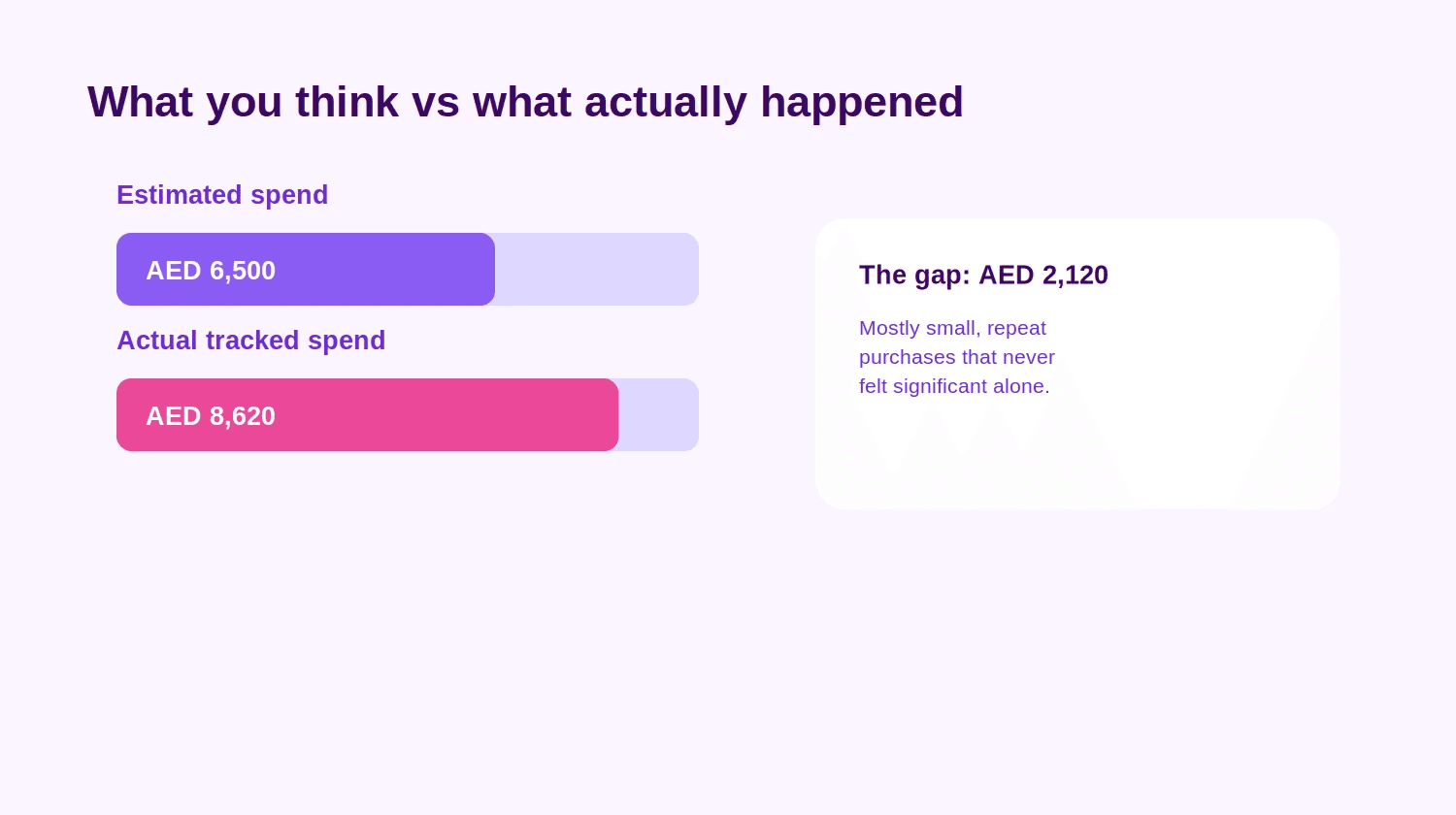
Bar comparison of estimated spend versus actual tracked spend with a highlighted gap
The Spending Categories That Surprise People in the UAE
Delivery, Coffee and the Small Repeat Purchase
Food delivery, daily coffee, and small convenience purchases are individually forgettable but collectively significant. A single AED 25 coffee order feels negligible in the moment; twenty of them in a month is AED 500, a figure that rarely appears anywhere except in a properly categorised spending habits app.
Salik, Fuel and Parking as One True Cost of Driving
Driving costs in Dubai and Abu Dhabi are split across several categories that most people never add together: Salik toll charges, fuel, parking, and periodic maintenance. Viewed separately, each looks manageable. Viewed together as one true cost of driving, the monthly figure is often higher than expected, and a tracker that groups these as a single transport category makes that visible.
Annual Bills Hidden in a Monthly View
Vehicle registration, health insurance renewal, and school fee instalments often land as a single large payment that distorts whichever month it falls in. A monthly spending tracker that treats these purely as they occur will show one alarming month followed by several unusually calm ones. Spreading annual costs across twelve months for tracking purposes gives a more honest read of ongoing spending pressure.
Reading Your Spending Without Judging It
Fixed, Variable and Impulse Spending
Not all spending carries the same weight. Fixed costs, rent, instalments, insurance, are largely outside your control month to month. Variable costs, groceries, transport, utilities, fluctuate but serve a clear purpose. Impulse spending is the category most worth examining, not because it is inherently wrong, but because it is the one most likely to differ from what you would choose with a moment's reflection. Superchat's Expense Manager can separate these categories so the review focuses on what is actually adjustable.
The Three Month Rule Before You Change Anything
A single unusual month, an emergency repair, a one off celebration, a trip, is not a pattern. Before making any real change to spending habits based on tracked data, look at three consecutive months. A category that is consistently high across all three is worth addressing. A category that spiked once and returned to normal usually is not.
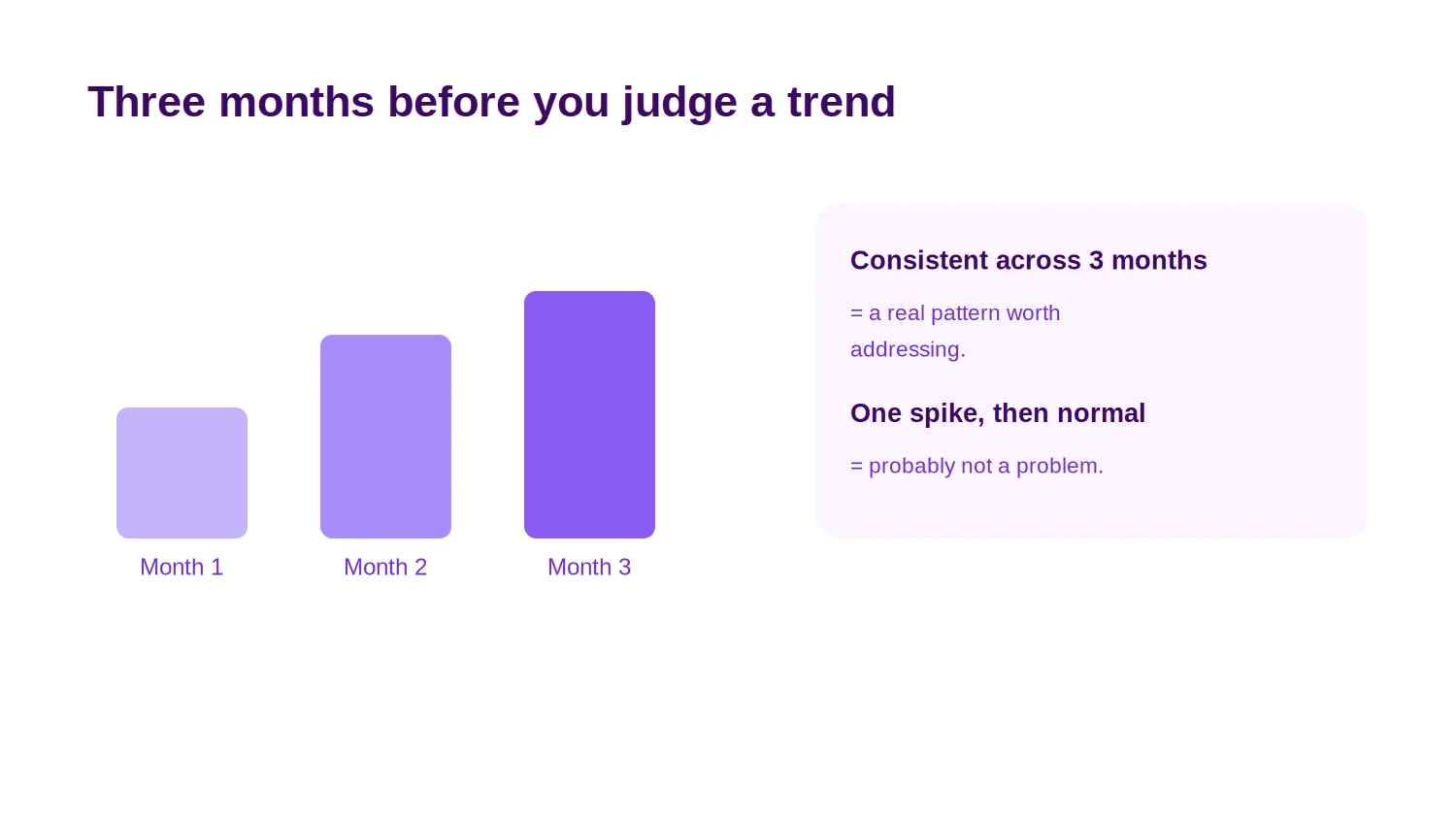
Three month bar chart illustrating the rule of checking a trend across three months before acting
Making a Spending Tracker Stick
Logging on the Spot Beats Reconciling on Sunday
The trackers that survive are the ones that require the least effort at the point of spending. Waiting to reconcile everything once a week from memory or a pile of receipts is where most manual tracking attempts fail. Superchat logs spending automatically as it happens through the Wallet, removing the weekly reconciliation task entirely.
One Number to Watch Instead of Twenty Charts
A tracker with twenty charts and twelve categories covers everything but rarely gets checked, because reviewing it feels like a project. Pick one number that matters most, total discretionary spending, or the delta versus last month, and check that consistently rather than attempting a full review every time. Ask Superchat for that single number directly rather than opening a dashboard designed to show everything at once.
Track Your Spending With Superchat
For UAE residents who want an honest answer to where their money actually goes, not an estimate, Superchat's expense tracking builds the picture automatically from real transactions, so the question is answered in a sentence rather than a spreadsheet.
See your spending breakdown with Superchat
Frequently Asked Questions
What Is the Best Spending Tracker App
The most useful spending tracker is one that logs transactions automatically and lets you ask direct questions about your patterns, rather than requiring you to read and interpret a dashboard yourself. Superchat's Expense Manager does both, connected to the payments you already make through the Wallet.
How Do I Track My Monthly Spending
The most reliable method is automatic logging at the point of each transaction rather than manual entry at the end of the week or month. Superchat records spending as it happens and can summarise it by category on request.
Is a Spending Tracker Different From a Budget App
Yes. A spending tracker records what happened. A budget app sets a limit and measures against it. Tracking is descriptive; budgeting is prescriptive. Most people benefit from tracking for a few months before setting a meaningful budget.
How Long Before Spending Data Becomes Useful
A single month of data can be misleading due to one off costs or unusual events. Three consecutive months gives a more reliable picture of genuine spending patterns versus temporary spikes, which is the minimum window worth reviewing before making changes based on the data.