
You’ve got a 45-minute gap between meetings, one return to make, one gift to grab, and maybe enough time for coffee if parking doesn’t turn into a side quest. That’s the main problem with mall citrus park. The mall itself isn’t hard. The time loss happens before you even walk in, then again when you drift past stores you didn’t come for.
Use this place like an operations stop, not a leisure outing. Go in with a first stop, a backup stop, and an exit plan. That matters more here because Citrus Park didn’t grow up as a tiny neighborhood center. The surrounding area started as a rural community in 1913, and the mall’s opening in 1999 helped push it into a modern suburban hub, with local land values rising 68% from $525 million in 1999 to $882.9 million by 2009, according to this history of Citrus Park’s growth.
That scale changes how you should approach a trip. Large regional malls reward people who think in routes, entrances, and stacked errands. If you care about that kind of efficiency, it also helps to understand the logic behind designing effective mall layouts, because once you know how centers are arranged, you stop wandering and start navigating.
Before you leave, put your stops into one sequence and build the route in a tool that can keep the trip tight. A simple trip planning setup is usually enough to keep one quick errand from turning into a half-day detour.
Table of Contents
Your Guide to an Efficient Trip to Citrus Park Mall
The fastest mindset
Mall Overview Hours and Contact Information
What makes this mall different
Pre-trip checklist
Best way to use the overview
How to Get There and Where to Park
Driving approach that saves time
Parking by purpose
Rideshare and transit
What doesn’t work
Curated Store and Dining Highlights
Shop by task not by aisle
Eat fast without settling
Best way to curate your route
Essential Services for Maximum Productivity
Errands worth stacking in one visit
What usually wastes time
Expert Tips for the Busy Professional
Timing beats speed
Route decisions that save time
Tactics that work and ones that don’t
Your Actionable Next Steps
Your Guide to an Efficient Trip to Citrus Park Mall
A productive trip starts before the drive. If your plan is “I’ll figure it out when I get there,” you’ll spend your shortest block of free time solving avoidable problems. At mall citrus park, the fast visit usually belongs to the person who knows the first door, the first store, and the last stop before they leave the office.
Think in mission types. One trip is wardrobe maintenance. Another is gift recovery, where you need something presentable, fast, and close to the exit. Another is errand stacking, where you combine a pickup, a quick meal, and one service appointment in a single lap.
Practical rule: Don’t build a mall trip around browsing. Build it around your first non-negotiable stop.
This property earns that kind of planning. It isn’t a small local plaza. Citrus Park Town Center grew into a major retail anchor after the area’s transition from rural land to suburban center, as noted earlier. That’s why the same place can feel easy on one visit and inefficient on the next. Your experience depends less on the mall and more on your route choices.
A simple framework works well:
One primary objective: Return, replacement purchase, workwear, gift, meal, or service.
One secondary errand: Add only one extra task unless both stops are close together.
One exit trigger: Leave as soon as the list is complete. Don’t “take one more lap.”
The fastest mindset
The busiest visitors often make the same mistake. They treat every anchor entrance as interchangeable. It isn’t. One entrance gets you directly into your task flow. Another adds a full interior walk and pulls you into impulse stops that don’t matter.
If you only need one or two stores, your best move is to use the mall as a targeted access point, not as a destination experience. Save the scenic loop for a weekend. On a workday, the win is simple. In, done, out.
Mall Overview Hours and Contact Information
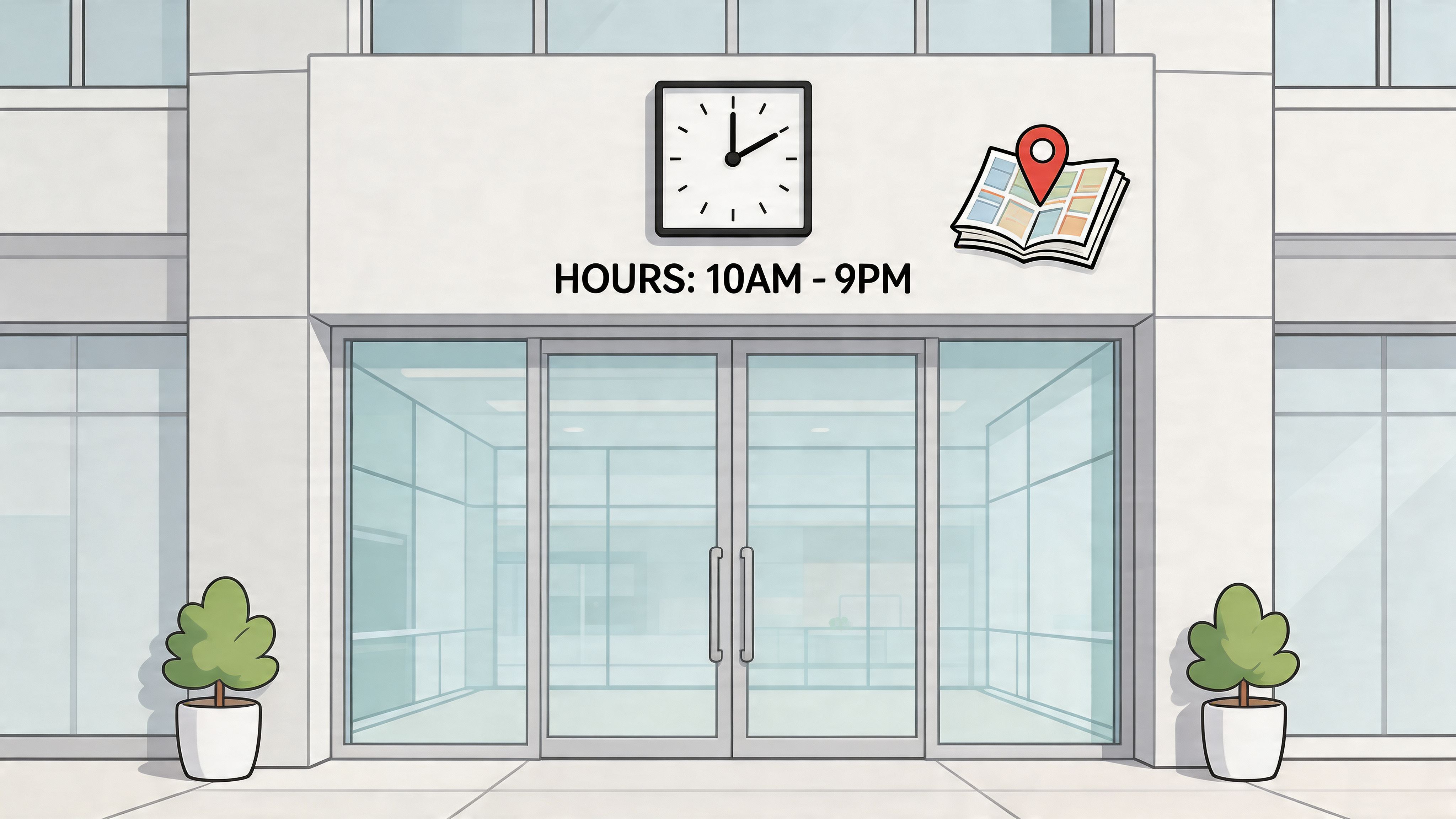
Start with the basics before you leave. For current hours, holiday adjustments, event-day changes, tenant listings, and mall contact details, check the official Citrus Park Town Center website and its interactive map before driving over. Mall-wide hours and individual store hours don’t always match, and anchor tenants can run on different schedules.
What makes this mall different
Citrus Park Town Center opened on March 3, 1999 as a 1.1 million-square-foot mall designed to mimic an old American downtown, complete with a Main Street theme, street lights, and benches, according to the Tampa Bay Times report on the mall’s opening. That design choice still matters because it changes how the place feels when you’re moving through it. It’s more navigable than some enclosed malls, but it can also encourage extra wandering if you arrive without a route.
The same reporting noted the mall was projected to generate $380 million in annual sales by drawing customers from three counties. That tells you what you need to know operationally. This is a regional center, not a quick strip plaza. Expect a bigger catchment area, more varied traffic patterns, and a broader mix of visitors depending on the day and time.
Pre-trip checklist
Before you get in the car, confirm these items on the official mall site:
Item | Why it matters |
|---|---|
Mall hours | Common area hours may differ from store hours |
Store directory | Helps you avoid unnecessary interior walking |
Interactive map | Lets you pick the right entrance before arrival |
Contact details | Useful if you need to confirm stock, services, or holiday timing |
If your visit depends on one specific tenant, call that tenant directly before you drive. Mall hours tell you when the building is open, not whether your target stop is fully operating.
Best way to use the overview
Don’t just check whether the mall is open. Check whether your exact plan is viable. If one store opens later than the common area, shift the order and handle coffee, a return, or a service stop first. That small adjustment is often the difference between a smooth midday run and wasted dead time inside the building.
How to Get There and Where to Park
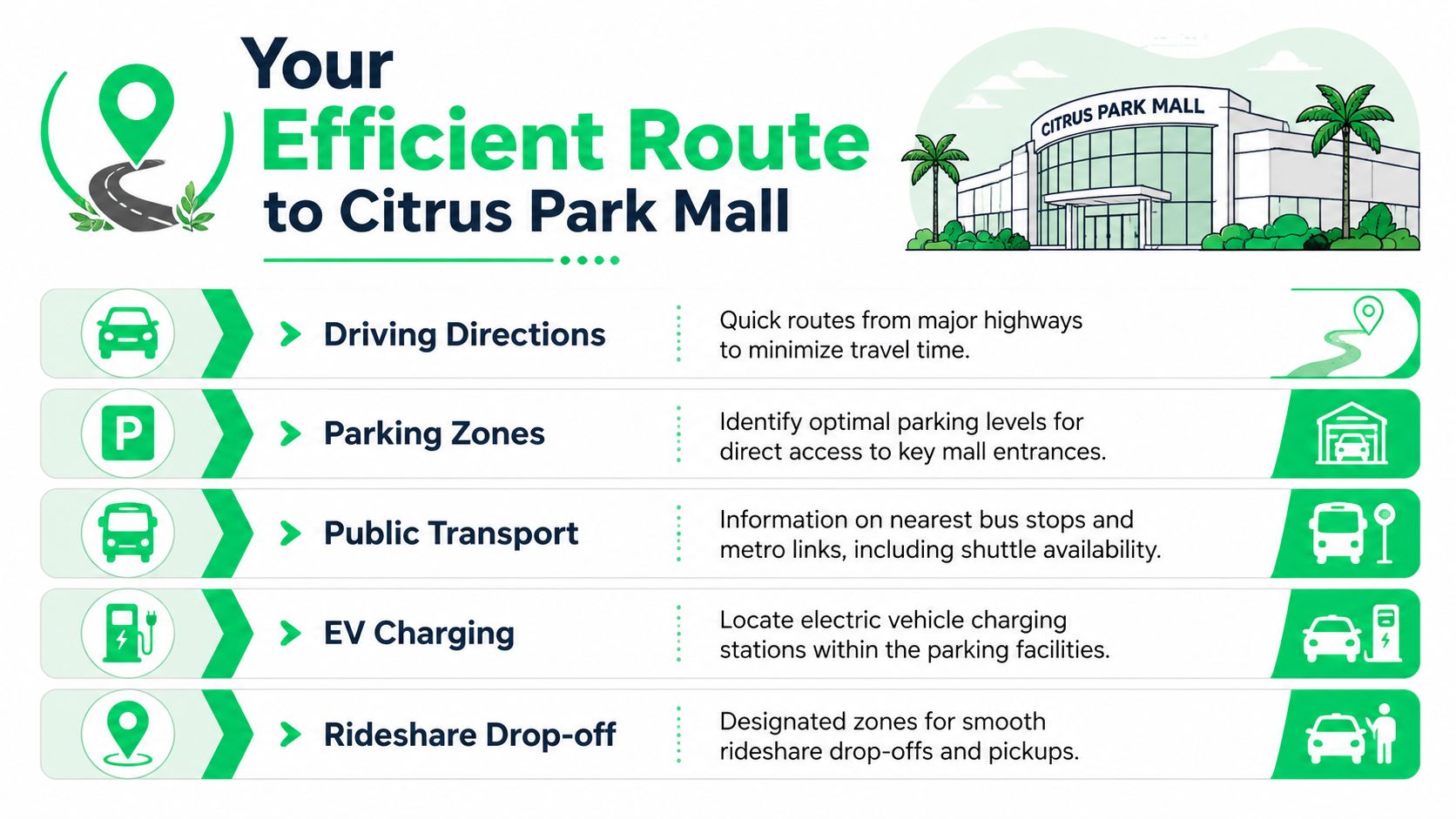
The access problem at mall citrus park isn’t distance. It’s volume. Citrus Park Drive sees 29,500 to 30,000 AADT, and the intersecting Veterans Expressway carries 72,400 AADT, creating 100,000+ daily vehicle exposure across the corridor, according to this commercial traffic analysis document. That’s why a short errand can still feel slow if you arrive at the wrong time or choose the wrong approach.
Driving approach that saves time
If you’re coming by car, decide your entrance before you get close. Don’t wait until you’re circling the property. The final few minutes are where most time gets burned, especially when multiple drivers are making late lane changes toward the same access points.
Use this decision logic:
Single-store mission: Park for the nearest exterior entrance to that store or anchor zone.
Two-stop mission: Split the difference only if both stops are on the same interior path.
Pickup-first trip: Favor the entrance with the simplest re-entry to the main road, not the one closest to the center of the mall.
If you’re driving an EV or want less circling after arrival, it helps to review car parking tools and planning options in advance so your arrival is tied to a specific parking objective, not just the building itself.
Parking by purpose
Different errands need different parking choices. Treat the lot like part of the route.
Your task | Best parking strategy |
|---|---|
Workwear or department store stop | Park near the anchor closest to your target brand |
Quick gift run | Choose an entrance with multiple general merchandise options nearby |
Meal and go | Park close to the dining cluster or food court access point |
Service appointment | Use the closest practical entrance, even if it means less “ideal” shopping access |
Park for your first stop, not for where you think you might end up later.
Rideshare and transit
If someone else is dropping you off, keep the handoff simple. Use a clearly identifiable entrance and text the exact door name or tenant landmark before arrival. “At the mall” is too vague for a clean pickup.
Public transit can work if your schedule is flexible, but for a compressed workday errand, fixed-route timing usually removes the very efficiency you’re trying to gain. Rideshare is a better fallback when parking demand feels uncertain or when you know you’ll leave during a heavier traffic window.
What doesn’t work
The worst move is entering the property without a parking plan and then chasing the first open row you see. That often puts you far from your first stop and guarantees backtracking on the way out. At a mall this size, “good enough” parking can still add a lot of walking.
Curated Store and Dining Highlights
You have 45 minutes between meetings, one return to make, one shirt to buy, and enough time for coffee only if the route is tight. That is how to use mall citrus park well. Build the trip around store clusters that solve a workday problem fast.
Shop by task not by aisle
For workwear, start broad and narrow only if needed. Dillard’s, JCPenney, and Macy’s are the fastest first stops when the goal is office basics, shoes, a belt, or a backup gift. You can compare brands, fit, and price in one pass instead of burning time across multiple specialty stores.
For a polished gift, speed beats originality. Beauty counters, accessories, department store gift sections, and boxed items usually win because they are easy to choose, easy to carry, and easy to wrap. If the recipient is not specific, buy something presentation-ready and move on.
If your visit overlaps with school pickup hours, weekends, or family entertainment traffic, expect some corridors to slow down. The former Sears space now houses Elev8 Fun, which changes foot traffic patterns near that side of the property. Plan your retail stops first, then decide whether the extra walk toward entertainment is worth it.
A current walk-through helps if you haven’t been in a while:
Eat fast without settling
The best dining choice depends on whether food is the objective or just fuel.
Coffee before shopping: Do it only if the line is short and your order is automatic.
Quick lunch: Pick a place with a short menu and fast turnover.
Food court stop: Best for groups or anyone who wants predictable timing.
Snack and exit: Often the smartest option if you still have another stop after the mall.
Known orders save time. Long menus and made-to-order customization do not.
If you want a quick way to sort options before you arrive, use a restaurant planning tool and decide the meal before you start walking.
Best way to curate your route
Use a three-stop cap for a workday visit. One primary store, one secondary errand, one food or recovery stop. More than that usually turns a targeted run into browsing.
A good route ends near your exit path, not in the center of the mall. That matters more than people think, especially if you are carrying bags or heading straight back to work. Analysts behind Purple's insights for mall WiFi point to movement patterns and dwell time as key signals in how shoppers use mall space. For a busy professional, the takeaway is simple. Cross-traffic and lingering zones cost time, so keep the route linear and avoid doubling back.
Essential Services for Maximum Productivity
The smartest use of mall citrus park isn’t shopping. It’s consolidation. A good visit lets you handle retail, one personal errand, and one practical service stop in the same window.
Errands worth stacking in one visit
Look for service tenants that solve off-calendar problems. That usually means ATMs or banking access, salon or grooming appointments, optical needs, and phone accessory or device-help kiosks. These aren’t glamorous stops, but they’re exactly the kind of tasks that otherwise force a second trip somewhere else later in the day.
A useful pattern is pairing a time-fixed service with a flexible retail stop. If you’ve got a grooming appointment or a pickup window, add a nearby purchase before or after it. That keeps waiting time productive instead of idle.
Here’s the best service logic for professionals:
Financial errand plus return: Handle cash or card admin first, then finish the retail task.
Personal care plus wardrobe: A haircut, quick grooming stop, or beauty purchase pairs well with department store browsing.
Optical or tech issue plus meal: If a service may involve a short wait, line up a coffee or quick lunch nearby.
What usually wastes time
People lose momentum when they mix service stops that require waiting with stores that invite browsing. That combination stretches a short visit into an open-ended one.
A better rule is simple. Pair one waiting task with one decisive task. For example, if you’re stopping for an adjustment, repair inquiry, or appointment check-in, make your second stop something binary like a return, pickup, or replacement purchase.
If an errand can branch into “maybe I’ll also look around,” it’s not the right companion task for a compressed visit.
This mall works best as a productivity hub when you treat every additional stop as justified by location, not convenience in the abstract.
Expert Tips for the Busy Professional
You leave a meeting with 45 minutes before the next one, need one return, one replacement item, and maybe coffee on the way out. At Citrus Park, that plan usually fails before you reach the front door. Walking time inside is manageable. The access roads are what disrupt a tight schedule. A summary of the area notes that congestion around the Citrus Park Drive extension can interfere with efficient access planning for visitors on a fixed timeline, as referenced in this Citrus Park Town Center overview.
Timing beats speed
A rigid calendar rewards boring timing. Weekday off-peak windows usually give the cleanest run. Lunch traffic, after-school spillover, and broad weekend shopping traffic add uncertainty you cannot control, and uncertainty is what breaks a quick errand.
Use a simple rule. Protect the drive in, not just the time inside.
These timing habits work well:
Use short gaps only when the full trip fits inside them: Include arrival, parking, checkout, and exit.
Build buffer before the approach: The last few roads into the property can cost more time than the purchase.
Shift the trip instead of forcing it: A slightly later arrival is often faster than pushing through a crowded window.
Leave earlier than your shopping task requires. The access roads, not the purchase itself, are often the schedule risk.
If you rely on your phone for store lookup, pickup notices, or quick work messages while inside, review Purple's insights for mall WiFi. The piece is useful for understanding how shopper movement, dwell time, and in-mall wayfinding affect the digital experience. This knowledge helps you move quickly, find the right tenant with less hesitation, and avoid building your route around assumptions about connectivity.
Route decisions that save time
Inside the mall, backtracking is the main time leak. Start with the farthest required stop in your target zone, then work back toward your exit. That keeps the trip closing in one direction instead of expanding.
For a compressed visit, this order is usually the most efficient:
Primary purchase or return first
Secondary stop only if it sits on the same path
Coffee or food last
Exit as soon as the final transaction is done
That sequence sounds basic, but it solves a common mistake. People finish the main errand near the center, drift toward one extra store, then end up leaving from the wrong side of the property with no time left.
Tactics that work and ones that don’t
What works:
Pickup-first thinking: Use pickup for standard items when a tenant offers it.
Fast checkout over pleasant checkout: The shortest functional line wins.
A parking photo on arrival: Useful if a call, text, or work interruption breaks your focus mid-visit.
One optional stop limit: If it is not clearly on the route, skip it.
What wastes time:
Making route decisions after you enter
Choosing the nicest entrance instead of the most useful one
Turning a completed errand into a browsing session
The professionals who use this mall well treat it like a controlled stop, not an outing. Finish the list, leave, and get the rest of your day back.
Your Actionable Next Steps
A good trip to mall citrus park is mostly logistics. Choose the right entrance, park for your first stop, keep the route short, and don’t let one extra errand multiply the time cost.
Use this checklist before you go:
Check the official store directory: Confirm your target tenant is open and worth the trip.
Open the interactive mall map: Match your first stop to the best entrance before departure.
Review current deals or events: Promotions can be useful, but events can also change how crowded certain areas feel.
Call the exact store if your visit is inventory-sensitive: Don’t assume stock, service availability, or pickup readiness.
Save the location in your preferred navigation app: That avoids last-minute fumbling at departure time.
Set a trip objective in one sentence: Example: “Return item, buy shirt, grab coffee, leave.”
Decide your exit trigger now: Once the list is done, the trip is done.
If you handle the planning up front, Citrus Park becomes useful in the way busy people need it to be. Not a wandering retail outing. A clean, controlled stop that fits between the rest of your day.
If you want that same level of control without juggling maps, messages, reminders, and bookings across different apps, Superchat is built for exactly that. It helps busy people turn a quick thought like “plan my mall stop between meetings” into an organized sequence with timing, follow-ups, and fewer taps.


