
You’ve got a few browser tabs open, a half-finished work message, and a family group chat that keeps circling the same question: beach, mountains, or city? That’s usually where a family vacation to North Carolina either comes together fast or turns into a slow, annoying planning project that eats your evenings.
North Carolina works unusually well for busy families because it gives you range without forcing you into a complicated decision tree. You can build a trip around beaches, mountain air, city attractions, or a mix of all three, and you can do it without stitching together a dozen disconnected stops. The state is large enough to feel varied, but not so fragmented that the logistics become the vacation.
Table of Contents
Why North Carolina Is Your Next Family Getaway
Why it works for overloaded parents
What North Carolina does better than generic family destinations
Choosing Your Home Base NC's Top 5 Family-Friendly Regions
How to pick fast
North Carolina family vacation regions at a glance
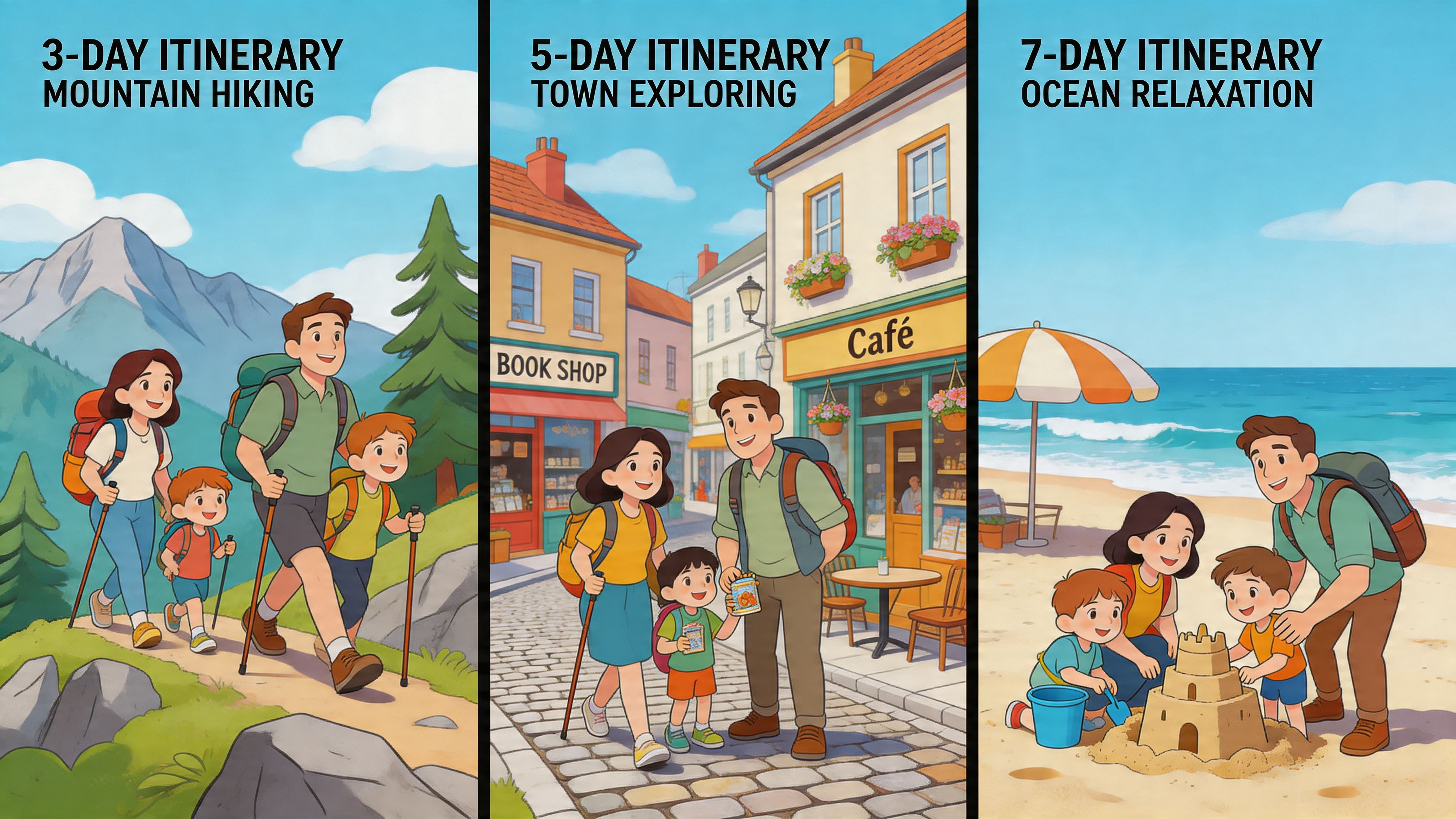
Sample Itineraries for Every Trip Length
Three days for a city reset
Five days for a coastal breather
Seven to ten days for a mountains-to-sea trip
Kid-Approved Attractions and Accommodations
For little adventurers
For curious minds
Where to stay without regretting it
Smart Budgeting and Travel Logistics for Busy Professionals
What costs more than expected
Where the smart savings are
Logistics that reduce friction
Seamless Planning and Booking With AI
A cleaner workflow
What to keep in one thread
Your Ready-to-Go North Carolina Action Plan
Why North Carolina Is Your Next Family Getaway
North Carolina is one of the easiest states to recommend when a family wants options without chaos. You can spend one trip on the coast, another in the mountains, and still feel like you’ve barely touched it. That flexibility matters when parents are trying to match very different energy levels in one household.
The state also isn’t a niche choice that requires a leap of faith. North Carolina ranks #5 in the U.S. for domestic visitation, with approximately 40 million domestic visitors in 2024. About 25% of travel parties included children, and overnight visitor parties spent an average of $992 per trip according to the North Carolina tourism spending record announcement. That tells you two useful things fast. Families already choose it in huge numbers, and they stay long enough to spend like it’s a real vacation, not just a pass-through stop.
Why it works for overloaded parents
A good family destination doesn’t just offer attractions. It reduces the number of decisions you have to make once you arrive.
North Carolina does that well because you can choose a single base and still have enough variety nearby to keep everyone engaged. If your kids want sand, nature, animals, and one memorable activity, that’s realistic. If one parent wants downtime and the other wants a full itinerary, that’s realistic too.
Practical rule: Pick a destination that lets you change pace without changing hotels. That’s where most family trips either stay smooth or become work.
What North Carolina does better than generic family destinations
Some family destinations are strong at one thing and weak everywhere else. They’re good for theme parks, or good for beaches, or good for hiking. North Carolina is better when your family doesn’t fit into a single lane.
That matters for executives and founders especially, because you usually don’t have time to recover from a bad itinerary. If you’ve carved out one long weekend or one proper week, the trip needs to feel usable immediately.
A family vacation to North Carolina also supports different trip lengths well:
Short trips work because city and coast options are easy to turn into focused long weekends.
Mid-length trips work because beach towns and mountain bases can carry several days without forcing overplanning.
Longer trips work because the state supports a real multi-region route rather than repetitive day trips.
North Carolina isn’t the right answer if your only goal is nonstop luxury resort time. It is the right answer if you want a trip that feels full, flexible, and manageable.
Choosing Your Home Base NC's Top 5 Family-Friendly Regions
Most families waste time by researching attractions before choosing a base. Do that in the reverse order. Once the home base is clear, the itinerary gets easier, the driving gets lighter, and the booking decisions shrink.
For out-of-state vacation planning, that’s the right level to think at first. Out-of-state overnight visitor parties in North Carolina had an average household income of $102,000 in 2024, 28% included children under 18, and they stayed an average of 3.9 nights according to the 2024 North Carolina Visitor Profile. In practice, that points to a family travel market built around multi-day stays, not rushed box-checking.
How to pick fast
Use your family’s default travel style, not your aspirational one. If your kids do better with routines, pick a region where you can settle in and repeat a few easy wins. If your family gets restless, choose a base with built-in variety.
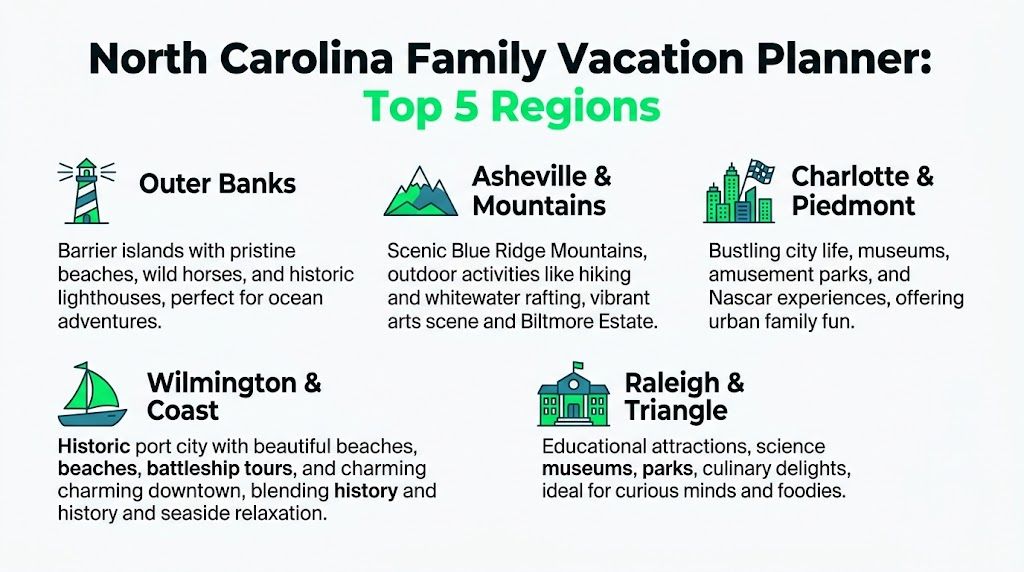
Here’s the simplest read on the five best regions.
Outer Banks fits families who want classic beach time, open space, and a trip that feels detached from work.
Asheville and the mountains fit active families who want scenery, fresh air, and a mix of outdoors with good food and walkable town time.
Charlotte and the Piedmont fit short trips, especially if you want urban convenience and one anchor activity.
Wilmington and the coast fit families who want beach access but also like history, downtown dining, and easy educational stops.
Raleigh and the Triangle fit families with curious kids who enjoy museums, parks, and a city break that doesn’t feel too intense.
When families struggle to decide, I usually ask one question: do you want the trip to feel slower, busier, or more balanced? That answer narrows the region faster than any attraction list.
North Carolina family vacation regions at a glance
Region | Vibe | Best For | Activity Focus | Ideal Season |
|---|---|---|---|---|
Outer Banks | Unplugged and beach-first | Families who want sand, driving-light days, and coastal scenery | Beaches, lighthouse visits, wildlife spotting | Summer and early fall |
Asheville & Mountains | Scenic and active | Families who like hiking, downtown strolling, and cooler weather | Hiking, mountain drives, arts, estate visits | Fall, spring, summer |
Charlotte & Piedmont | Efficient and energetic | Busy families planning a long weekend with minimal friction | Adventure attractions, museums, city dining | Year-round |
Wilmington & Coast | Coastal with character | Families who want beach time plus history and a walkable town center | Beaches, riverfront, historic sites, nature trails | Spring, summer, early fall |
Raleigh & Triangle | Smart and easygoing | Families with school-age kids who enjoy hands-on learning | Museums, parks, food, campus-area exploring | Year-round |
A few trade-offs matter.
Charlotte is the easiest region for a compressed trip, but it won’t give you that unplugged vacation feeling unless you intentionally slow it down. The Outer Banks can feel restorative, but if your family gets bored without structured activities, you’ll need to plan more deliberately. Asheville gives you range, though weather and winding drives can wear down younger kids if you try to cram too much into each day.
For a family vacation to North Carolina, the best home base isn’t the most famous one. It’s the one that matches your family’s real travel tempo.
Sample Itineraries for Every Trip Length
Families don’t need a rigid schedule. They need a trip shape. The best itinerary gives the day a clear purpose, leaves room for weather and moods, and avoids the mistake of turning every vacation day into a production.
Three days for a city reset
This version works well for Charlotte. Arrive, check in, and keep day one intentionally light. A neighborhood dinner, an easy walk, and an early night usually beat trying to “maximize” the arrival day.
Day two is your anchor day. Build it around one major experience and one softer backup option. In Charlotte, that might mean a morning adventure outing, a proper lunch, hotel downtime, then an evening meal somewhere easy and casual.
Day three should feel tidy, not squeezed. One breakfast you’re looking forward to, one final activity, then departure without the rushed final-hour scramble.
This format works because it respects family energy. Short trips fall apart when parents try to make them feel longer than they are.
Five days for a coastal breather
Wilmington is strong for this. You can divide the trip into two beach-heavy days, one downtown day, one nature day, and one flex day for weather or fatigue.
One of the most useful educational stops near Wilmington is Carolina Beach State Park, where families can walk a 1.5-mile trail to see the Venus flytrap in its rare native habitat, with peak viewing from May to July according to this local guide to family trips in North Carolina. That’s the kind of stop I like to place in the middle of a beach trip. It changes the rhythm without requiring a full relocation day.
A good five-day coastal trip usually looks like this:
Day 1
Arrive and settle: Grocery stop, check-in, short beach walk, simple dinner close to your lodging.Day 2
Full beach day: Go early, take a midday break, return late afternoon if the kids still have energy.Day 3
Nature and learning: Use the state park or another easy outdoor stop, then keep the evening relaxed.Day 4
Town and waterfront: Shops, lunch, something sweet for the kids, no hard reservations if possible.Day 5
Flex day: Repeat the best part of the trip instead of forcing one more “must-do.”
Here’s a good video to help visualize the variety a North Carolina trip can hold:
Seven to ten days for a mountains-to-sea trip
This is the trip people often overcomplicate. Don’t bounce every night. Use two bases, sometimes three if your family is highly mobile and your kids handle transitions well.
A practical version starts in the mountains for active days, then shifts to the coast for decompression. Put the more demanding hiking, scenic drives, and packed sightseeing earlier in the trip. Finish with easier beach days and low-decision evenings.
A strong family itinerary gets easier as the trip goes on. Parents are usually more tired by day six than they expect.
A mountains-to-sea route is best when you want a fuller family vacation to North Carolina without repeating the same day structure over and over. The mistake is trying to “see the whole state.” The better move is seeing two distinct sides of it well.
Kid-Approved Attractions and Accommodations
The fastest way to build a family trip is to match attractions to your kids’ interests, then choose lodging that supports the daily rhythm. Parents often reverse that and end up with a nice-looking hotel that creates extra driving or awkward meal logistics.
For little adventurers
Charlotte gives you one of the clearest high-energy family options in the state. The U.S. National Whitewater Center features the world’s largest artificial whitewater river, with family-friendly rafting sessions on Class II-IV rapids in a controlled environment, as noted in this North Carolina family vacation ideas guide. That makes it a strong anchor activity for older kids and for parents who want one memorable adventure day instead of a patchwork schedule.
Adventure attractions work best when you treat them as the main event, not one stop among five. Build the day around them. Add a good breakfast, a nearby lunch, and recovery time afterward.
Other useful picks in this category are beach days with one simple add-on, short scenic hikes, or waterfront exploring where kids can move freely without constant correction.
For curious minds
Families with kids who like animals, nature, or unusual experiences usually do well in Wilmington and the Triangle. Educational stops are most successful when they don’t feel like school on vacation. That’s why state parks, waterfront museums, and hands-on science spaces usually beat lecture-heavy attractions.
A few planning principles make these outings work better:
Choose one learning stop per day: Two is often too much unless your kids are highly engaged and older.
Pair it with a reward: Ice cream, beach time, or pool time works well.
Keep the drive short: Interest fades quickly when the attraction requires a long haul and a complicated parking setup.
Where to stay without regretting it
Accommodation matters less for prestige and more for daily functionality. For most families, there are three sensible choices.
Vacation rentals are best when you need separate sleeping zones, easy breakfasts, and laundry.
Resorts or full-service hotels work well when you want on-site amenities and minimal planning once you arrive.
Suite-style hotels are the safest middle ground for shorter stays.
When you compare properties, scan for the details that affect the whole trip: parking simplicity, breakfast options, walkability, elevator access, pool rules, and how quickly you can reach your first activity in the morning. If you’re narrowing options, a tool for family-friendly hotel booking can help keep choices in one place while you compare the trade-offs.
A great property doesn’t need to be luxurious. It needs to reduce friction at the moments families usually get stressed.
Smart Budgeting and Travel Logistics for Busy Professionals
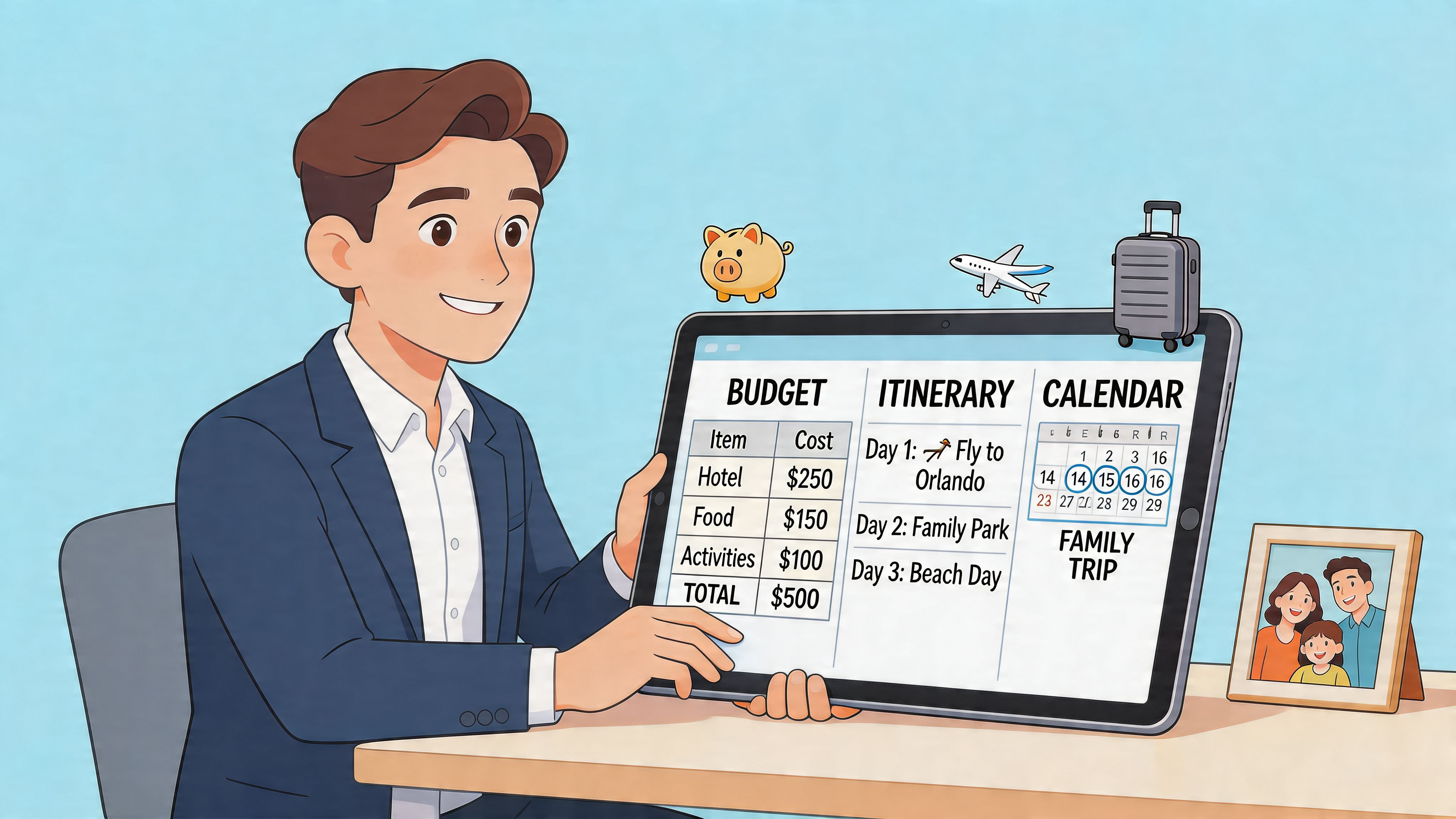
Budget pressure usually shows up in small leaks, not one giant mistake. A family trip starts with a hotel and transportation budget, then gradually expands through snacks, parking, gear rentals, attraction add-ons, and convenience spending because everyone is tired.
The pressure is real. Average North Carolina family trip expenses reached $3,200 in 2025, and travelers can find value by choosing alternatives such as Morganton over Asheville to cut lodging costs by up to 30% while keeping access to places like Linville Gorge, according to this North Carolina family destinations roundup.
What costs more than expected
Parents usually budget for lodging and transportation first, which makes sense. But the daily operational costs are what push the trip from “reasonable” to “why is this so expensive?”
Watch these categories closely:
Food convenience spending: Airport meals, extra coffees, beach snacks, and casual takeout add up fast.
Activity layering: One paid activity per day can be fine. Multiple add-ons in the same day usually aren’t necessary.
Transport inefficiency: Long drives, repeat parking, and poor base selection create extra spending with no real upside.
Budget trips by day type, not by category alone. A transit day, beach day, and attraction day spend very differently.
Where the smart savings are
The best savings don’t feel like sacrifices. They come from location choices and trip design.
If Asheville pricing feels steep, a nearby base such as Morganton can give you mountain access with less cost pressure. That’s the kind of change that preserves the experience instead of shrinking it. The same logic works on the coast. Staying slightly outside the most in-demand strip can make meals, parking, and daily movement easier.
Families also save money when they repeat what worked. If day two’s beach setup was perfect, do it again instead of paying to test a new activity your kids may not care about.
For ground gear, don’t overpack randomly. If you’re bringing beach and kid-hauling equipment, a guide on choosing the best family wagon cart is useful because the right cart changes arrival logistics at beaches, parks, and rental check-ins more than people expect.
Logistics that reduce friction
The best logistical move is usually the least glamorous one. Cut transfers. Cut hotel changes. Cut the number of “we’ll decide later” decisions.
A practical workflow looks like this:
Lock the base first: Don’t chase attraction lists before you know where you’re sleeping.
Build one anchor per day: One main event, one backup, one meal plan.
Create a small spending buffer: Trips run smoother when every coffee or parking fee doesn’t feel like a decision.
Track as you go: A running view of family travel expenses helps prevent the end-of-trip surprise. Tools for travel expense tracking are helpful when you want visibility without spreadsheet cleanup.
Packing should support the trip style. For coast-heavy trips, prioritize sand management and easy carry systems. For mountain trips, prioritize layers, footwear, and car snacks. For mixed-region trips, pack around laundry access so you don’t bring your whole house.
Seamless Planning and Booking With AI
Most trip stress isn’t caused by the destination. It’s caused by fragmentation. Flight details sit in one app, hotel emails in another, dinner ideas in your notes, and the family calendar somewhere else. That system works right up until one delay, one weather change, or one forgotten confirmation.
A cleaner workflow
The faster method is conversational planning with actions attached to it. Start broad, then narrow.
A useful prompt looks like this: find family-friendly hotels in Wilmington with easy beach access, parking, and strong cancellation terms for our dates. From there, compare two or three realistic options instead of browsing endlessly.
Then move to the next layer:
Transportation: car rental, drive timing, airport transfer, or parking plan
Lodging: refundable option first, then room type
Activities: only the ones that need advance booking
Meals: reserve only high-friction meals, not every dinner
If you want one place to manage that flow, an AI trip planning workflow is useful because it keeps the planning conversation connected to the actual bookings and schedule.
What to keep in one thread
Families save time when the whole trip can be searched quickly. Keep the following together whenever possible:
Item | Why it matters |
|---|---|
Hotel confirmations | You’ll need them at check-in and when plans shift |
Flight or drive details | Arrival timing affects every first-day decision |
Activity bookings | Especially useful for weather-sensitive days |
Restaurant reservations | Prevents last-minute scrambling in popular areas |
Packing notes | Helps if part of the family arrives separately or repacks mid-trip |
Don’t automate everything blindly. Keep judgment where it belongs. Parents still need to decide whether a family is better suited to a beach-first trip or a mountain-first one, and whether a packed itinerary will work for their kids.
What AI should remove is the administrative drag. It should cut the searching, comparing, storing, and reminding that usually makes a family vacation to North Carolina feel harder than it needs to be.
Keep the human decisions. Automate the repetitive ones.
Your Ready-to-Go North Carolina Action Plan
If you’re planning under time pressure, don’t try to build the perfect trip all at once. Build a strong version in the right order.
Start with the home base. Choose the region that matches your family’s real travel style, not the one that sounds most impressive. Beach families should lean coast. Active families should lean mountains. Short-trip households usually do better with city convenience.
Then shape the trip around one clear rhythm. The most reliable family vacations use a simple structure: one anchor activity a day, one easier backup, and enough open space that nobody feels managed from breakfast to bedtime.
Here’s the condensed plan I’d use:
Pick one region first: Don’t research the whole state at once.
Match the trip length to your energy: Three days, five days, or a two-base longer route.
Choose attractions by child interest: Adventure, nature, learning, or easy entertainment.
Book lodging for function: Space, parking, breakfast, laundry, and location beat flashy photos.
Set the budget around trip design: A better base often saves more than aggressive coupon hunting.
Centralize confirmations: Booking details should be easy to search when plans change.
One more rule matters. Leave some room in the itinerary for repeat wins. Families often remember the second beach visit, the easy breakfast spot, or the low-stress trail more than the expensive marquee stop.
A family vacation to North Carolina works best when it feels coordinated but not overengineered. That’s the sweet spot. Enough structure to keep the trip smooth. Enough freedom that it still feels like time off.
If you want to turn this plan into confirmed bookings without juggling tabs, spreadsheets, and scattered emails, try Superchat. It helps busy travelers organize trip research, bookings, schedules, and spending in one private thread so the vacation feels easier before it even starts.


