
Your Perfect Oregon Trip, Planned in 5 Minutes
Planning a 5 day oregon itinerary can feel like a bad spreadsheet problem. You want Portland, but you also want the coast. You want waterfalls, but not five hours of windshield time every day. You want a trip that feels full, not rushed.
That’s where most Oregon guides fall apart. They hand you one generic route, cram in too much driving, and leave you to sort out reservations, opening hours, parking, and backup plans on your own. That approach works if you enjoy travel admin. Most busy travelers don’t.
The smarter move is to choose a trip style first, then build around it. Oregon rewards focus. One version of the trip should lean urban, another should prioritize wine and slower meals, another should chase big scenery, and another should admit the reality that you may still be taking calls between outings. Five days is enough if you stop trying to do the whole state in one sweep.
Below are five complete blueprints, each built for a different kind of traveler. Pick the one that fits how you like to travel, not how you think you should travel. If you use an AI assistant to keep bookings, calendars, payments, and confirmations in one place, the whole trip gets easier fast. One chat thread is a lot cleaner than bouncing between maps, inboxes, restaurant apps, and hotel emails.
Table of Contents
1. Portland Urban Explorer
Why this route works
Best day-by-day rhythm
How to run it efficiently
2. Mountain & Wine Country Loop
Where this trip shines
A strong five-day flow
What works and what does not
3. Crater Lake & High Desert Adventure
Who should choose this one
The right five-day structure
Execution details that matter
4. Pacific Northwest Complete Experience
Who this route is for
The smartest five-day flow
Trade-offs that make this route better
How to keep the trip from turning messy
5. Business Traveler's Efficiency Route
Best use case
A realistic working schedule
The systems that make it work
5-Day Oregon Itinerary Comparison
Execute Your Oregon Itinerary Like a Pro
1. Portland Urban Explorer
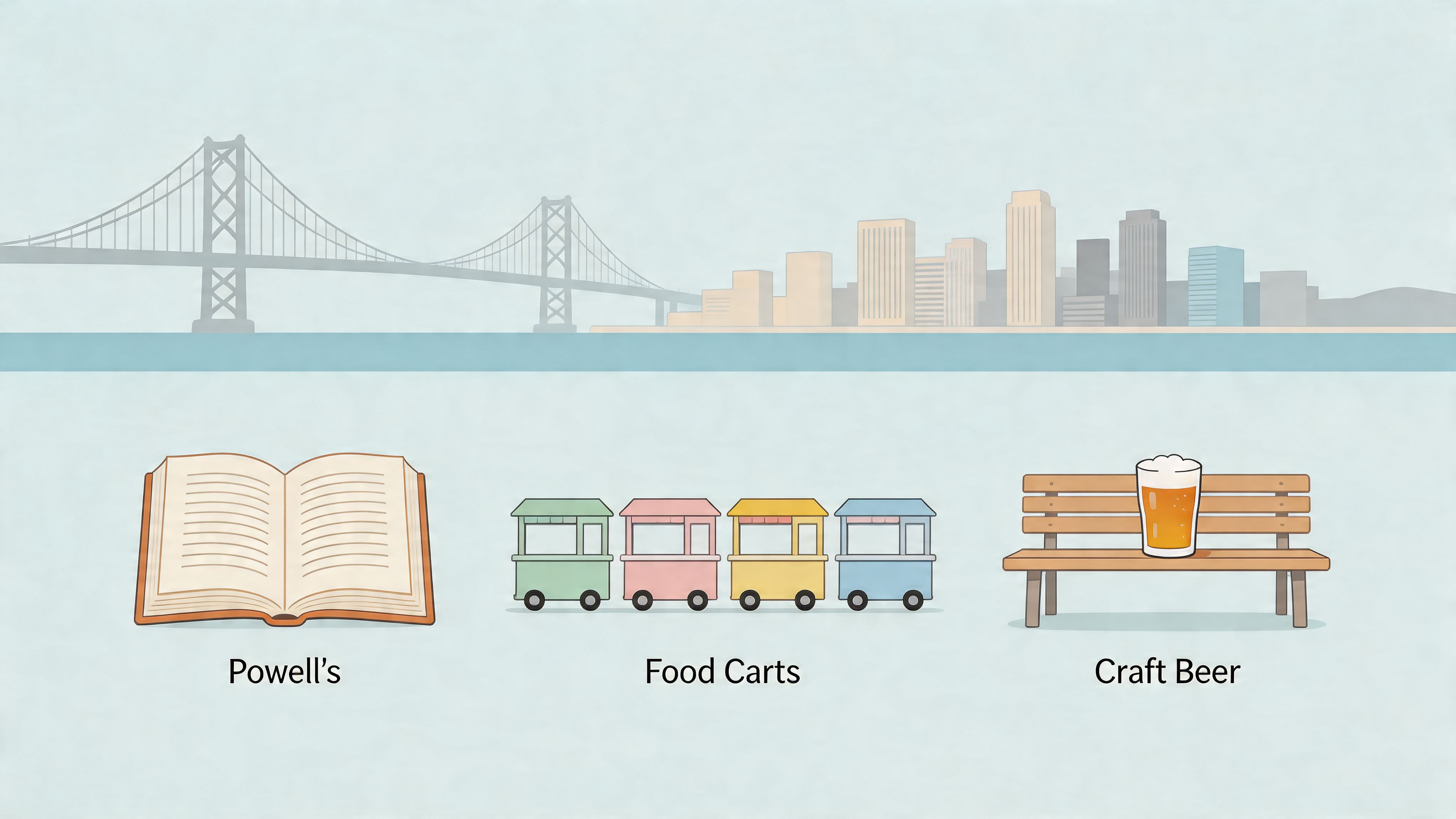
You land in Portland, check into one hotel, and keep it for all five nights. That single decision changes the trip. Instead of burning time on repacking, parking, and hotel check-ins, you use Portland as a high-function base for an urban-first Oregon trip with two smart day trips built in.
This blueprint fits travelers who want their five days to feel varied without turning into a driving challenge. You get bookstores, neighborhoods, breweries, coffee, food carts, a coast hit, and a Columbia River Gorge finish. For an urban explorer, that mix usually beats a route with three overnight stops and too much windshield time.
Why this route works
Portland rewards clustering. Downtown and the Pearl work well together. Alberta, Mississippi, and Hawthorne do not belong in one rushed loop unless you enjoy spending your afternoon in traffic and hunting parking. The smarter move is to build each day around one compact zone, then add one anchor meal.
The other reason this route works is restraint. One coast day is enough to get Oregon’s signature beach scenery without giving up two nights to a coastal hotel. One Gorge day is enough to add waterfalls and canyon views before departure. That leaves the rest of the trip for the part Portland does better than anywhere else in the state: neighborhoods with real personality and a deep bench of places to eat and drink.
Best day-by-day rhythm
Day 1 should stay central. Arrive, settle in, then cover downtown, Powell’s, and the Pearl on foot. Save energy for dinner and one bar afterward. Jet-lagged travelers usually overbuild this first day and end up wasting one of the city’s strongest dinner nights.
Day 2 is your neighborhood day. Pick two eastside areas, not three. Alberta plus Mississippi works if you want a more social, restaurant-heavy day. Hawthorne plus Division works better if your group prefers shops, casual food, and less backtracking. Build around lunch in one area and dinner in the other.
Day 3 is the coast. Leave early for Cannon Beach, beat the worst parking crunch, and stay long enough for a late lunch or early dinner before heading back. A same-day return sounds ambitious on paper, but it is usually the better trade-off for a five-day trip based in Portland.
Day 4 is your flex day. Use it for food carts, a museum, a long coffee crawl, Washington Park, or anything weather pushed off earlier. This is also the right spot for your harder-to-book meal. If you want one place to organize those reservations before you go, this guide to restaurant reservation apps for busy diners is useful.
Day 5 is the Gorge on the way out. Keep expectations tight. One or two stops is enough before a flight or long drive.
How to run it efficiently
Hotel location matters more here than people expect. Stay in downtown Portland, the Pearl, or the inner eastside if you want to move quickly without driving across the city for every meal. Suburban hotels can look cheaper, but the savings often disappear once you add rideshares, parking, and the time cost of commuting back into the city.
A few planning rules make this version run well:
Book one high-demand dinner per day at most. Portland is better with room for spontaneity.
Use rideshare for dense nightlife zones. Parking can eat up the exact time you thought you saved by driving.
Start the coast day early. The beach is calmer, parking is easier, and the return drive feels less tedious.
Treat Day 4 as insurance. Good itineraries have recovery space.
Keep the Gorge simple on departure day. One waterfall stop is memorable. A rushed chain of stops is not.
Multnomah Falls works especially well for Day 5 because it delivers a real Gorge stop without requiring a full hiking block. That is the logic behind this entire blueprint. Keep the base fixed, choose neighborhoods with intention, and add only the scenic side trips that earn their time. Among the five Oregon itinerary options in this guide, this is the strongest choice for travelers who want city energy first and Oregon scenery in controlled doses.
2. Mountain & Wine Country Loop

This is the version for travelers who want Oregon to feel restorative. Less city friction, more slow mornings, tasting rooms, scenic drives, and one mountain reset before heading back. If your ideal trip includes long lunches and a cleaner pace, choose this over the coast.
The smart structure is two bases, not three. Start in Willamette Valley wine country for the first stretch, then move toward Mount Hood for the final portion. That creates a clear split between indulgent days and alpine scenery instead of blending both poorly.
Where this trip shines
Wine-country travel only works when you stop pretending you can improvise every tasting. Good itineraries in Dundee or McMinnville feel easy because someone made the appointments, driver plan, lunch timing, and lodging sequence line up. When people skip that, they either drink too much too early or spend half the day waiting for their next slot.
You don’t need a packed tasting schedule. Two or three stops in a day is enough if one includes food or if the town itself is part of the experience. Add one long dinner, one casual lunch, and leave breathing room between pours. Oregon wine country is better when it feels measured.
A strong five-day flow
A practical route looks like this. Day 1, leave Portland and settle into wine country without trying to “make up time” by squeezing in too much. Day 2, focus on one cluster of vineyards and a proper dinner. Day 3, shift toward McMinnville or a nearby pocket you haven’t touched yet, then keep the evening quiet. Day 4, move toward Mount Hood and swap the tasting pace for fresh air and bigger views. Day 5, take the scenic drive back with one or two stops, not six.
Travel Oregon’s coast planning data is useful here for a broader trip-planning lesson even if you aren’t doing a coast-heavy route. It notes that trip planning often relies on websites and friends, while actual travel spending often skews toward retail and shopping, as shown in the Regional Coast Plan PDF. In practice, that’s a reminder to decide in advance whether your budget is for bottles, meals, lodging, or extras, because wine country makes impulse spending very easy.
Keep your mountain night simple. After multiple tastings and a scenic transfer day, a lodge dinner and an early night usually beat another “must-try” stop.
What works and what does not
What works is building one dedicated wine day, one mixed food-and-wine day, and one mountain day. That gives each part of Oregon room to breathe. What doesn’t work is back-to-back heavy tasting days followed by a long mountain drive. By then, even a beautiful road starts to feel like admin.
For logistics, centralizing reservations matters more on this route than almost any other. Tastings, dining, and transport all run on time windows. If you use an AI assistant to hold confirmations, calendar reminders, and driver bookings in one place, you cut down on the small errors that derail wine-country days. The best version of this 5 day oregon itinerary feels calm because the scheduling work was done before you arrived.
3. Crater Lake & High Desert Adventure
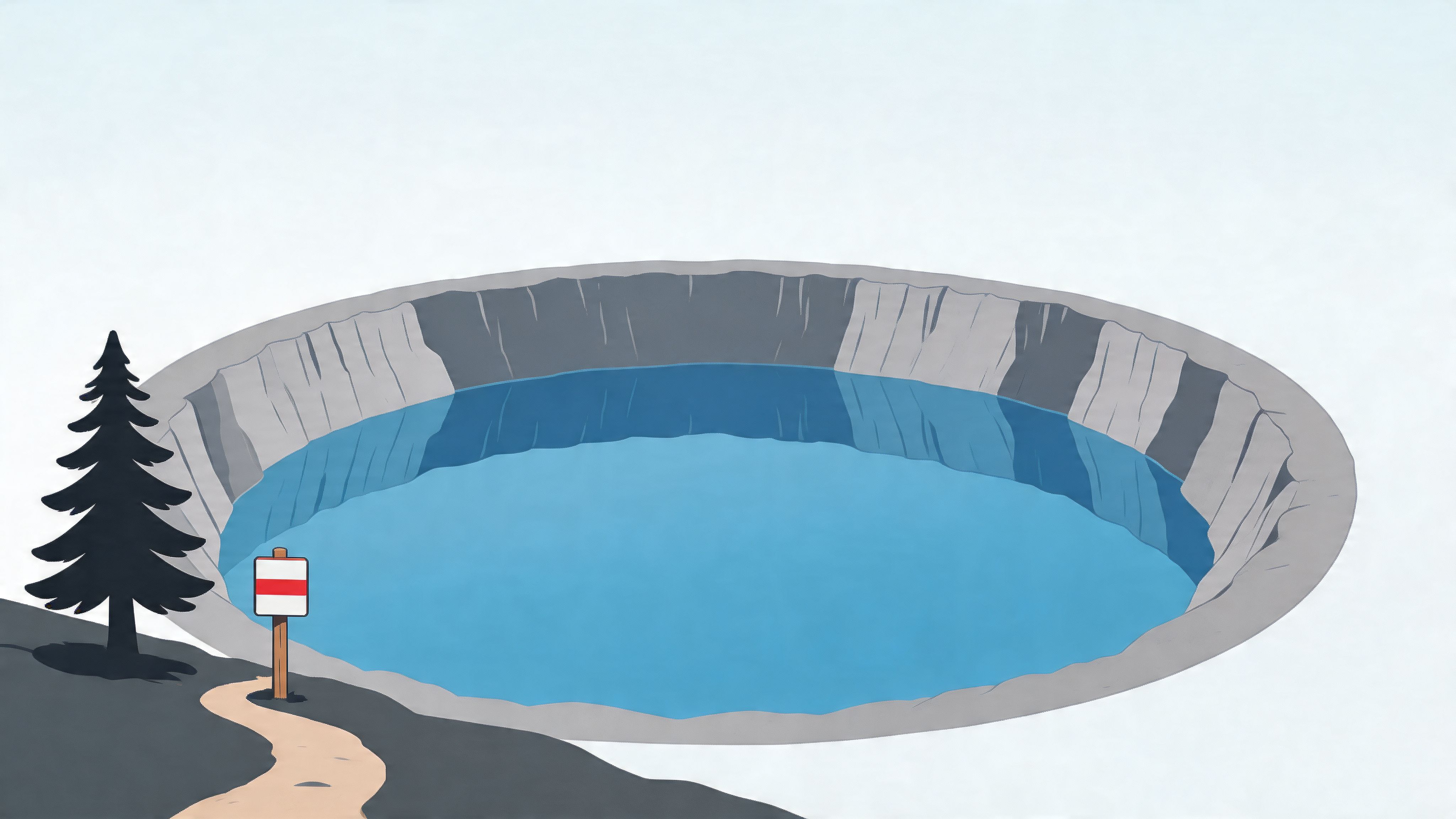
Choose this route if you want distance from your inbox, not proximity to restaurants. Southern Oregon rewards travelers who like space, silence, volcanic scenery, and long scenic stretches where the point is the place itself.
This isn’t the easiest Oregon trip. It is one of the most satisfying. The trade-off is obvious. You give up density and convenience in exchange for immersion.
Who should choose this one
A Crater Lake centered trip works for travelers who don’t need constant stimulation. If your favorite part of travel is waking up somewhere that feels far away from routine, this route delivers. If you want nightlife, spontaneous dining options, and lots of backup plans, it doesn’t.
The mistake people make is trying to combine Crater Lake with too many western Oregon highlights in the same five days. That turns a high-desert trip into a driving contest. Better to commit to the southern circuit and let the scenery carry the experience.
The right five-day structure
Day 1 is your transfer day south. Don’t promise yourself a big evening activity after the drive. Just get in, eat, and reset. Day 2 belongs to Crater Lake. Give it the whole day, because rushing a place built around viewpoints and changing light defeats the purpose. Day 3 is for nearby hikes, waterfalls, or lower-key scenic time. Day 4 can branch into surrounding volcanic terrain and quieter backroads. Day 5 is the return north with selective stops.
On a pure planning level, this route is about accepting disconnection. Cell service can be patchy, and that changes how you manage the trip. Load confirmations, lodging details, route notes, and park information before you leave stronger signal. Don’t assume you’ll “look it up later.”
You’ll enjoy this trip more if you treat offline time as part of the experience instead of a problem to solve.
Execution details that matter
This is the blueprint where calendar blocking matters most. If you’re traveling while work still follows you, put hard holds on your schedule before departure. Otherwise, a “quick call” can end up landing in the middle of your longest drive or your only clear-weather window.
A few practical choices make this route better:
Book lodging early: Remote inventory gets thin fast. Last-minute flexibility is useful, but too much waiting can leave you with awkward drive times.
Keep food expectations realistic: Pack snacks and water. Nature-forward routes often have fewer convenient meal pivots than people expect.
Use one planning thread: Store every reservation and note in one place. This matters more when you can’t rely on constant connectivity.
Protect your return day: Don’t overschedule the final drive. One scenic stop is memorable. Five rushed ones are not.
What works is giving Crater Lake emotional center stage. What doesn’t work is treating it like a box to tick on the way to something else. In a five-day window, this route succeeds only when the lake and the surrounding terrain are the trip, not an add-on.
4. Pacific Northwest Complete Experience
You wake up in Portland on day three, your phone shows waterfalls to the east, sea stacks to the west, and a dinner reservation in wine country tomorrow. That tension is the point of this route. It is the sampler for travelers who want Oregon in layers, not in one theme.
Among these five trip blueprints, this one fits the traveler who hates choosing between city time, coast scenery, and classic Pacific Northwest nature. It also asks for the most discipline. A five-day window can handle variety, but only if you treat each region as a highlight reel instead of a full inspection.
Who this route is for
Choose this version if your group wants broad coverage and can tolerate a faster tempo. It works well for first-time visitors, mixed-interest couples, and families or friend groups who would get bored spending all five days in one setting.
Skip it if your real priority is depth. The coast alone can fill five days. Portland and wine country can too. This blueprint wins on range, not immersion.
The smartest five-day flow
Day 1 belongs to Portland. Keep it local and efficient. Pick one or two neighborhoods, book a strong dinner, and get to bed at a reasonable hour because the next two days work better with early starts.
Day 2 is the Columbia River Gorge. Multnomah Falls is the obvious anchor, but the smarter move is to build the day around timing, not around a long attraction list. Start early, choose a few stops that are close together, and decide in advance whether Hood River is part of the plan or whether you want to be back in Portland before traffic thickens.
Day 3 is your coast day. Cannon Beach is the cleanest fit if you want iconic scenery and an easy headline stop. Seaside makes more sense if your group wants more town energy, easier casual food options, and a boardwalk feel. Trying to cover too much coastline in this itinerary usually creates more windshield time than payoff.
Day 4 should shift the tone again. Use it for a bigger outdoor block that feels different from the coast. That might mean forest trails, a second Gorge area stop you skipped earlier, or a lower-friction nature day closer to Portland if the group is running low on energy. The right choice depends on weather and stamina, not on checking one more famous place off a list.
Day 5 is the decompression day. Wine country works well here because it slows the pace without feeling like wasted time before departure. Keep it to one tasting area and one good meal. More than that starts to feel like administrative work.
Trade-offs that make this route better
Hotel strategy matters more here than on the Portland-first plans. If you return to the same room every night, you simplify check-ins but you also accept more backtracking. One well-placed overnight shift can save hours. Two usually adds drag unless your group is highly organized.
This route also benefits from clear daily roles. One person handles timing. One person handles reservations. One person keeps the shared plan updated. That sounds small until weather changes, parking fills up, or lunch gets pushed later than expected.
For groups splitting costs across gas, parking, tastings, and last-minute bookings, keep receipts in one place from day one. A simple shared trip expense tracker cuts down the usual end-of-trip math and helps you spot where the budget is drifting before the final day.
How to keep the trip from turning messy
Use a strict filter. One signature stop per region. One meal each day that you care about. One buffer block for weather, traffic, or the slowdown that always happens when a group needs coffee, photos, and a bathroom break at the same time.
That is what makes this blueprint work.
What ruins it is treating five days like permission to do Portland, the full Gorge, half the coast, multiple hikes, and several wine stops at full speed. The better version feels curated. You leave with a real sense of Oregon’s range, and enough left unseen to justify coming back with a more focused plan next time.
5. Business Traveler's Efficiency Route
This is the most honest 5 day oregon itinerary in the bunch. You’re in Portland for work, you’ve got meetings or deadlines, and you still want Oregon to feel like more than hotel walls and rideshares. Good. That can work if you design the trip around your calendar instead of pretending work isn’t there.
The best version uses Portland as your work base and treats exploration as protected afternoon and evening windows. Don’t build a fantasy leisure trip around tentative meetings. Build a real hybrid schedule and defend it.
Best use case
Portland is well suited to this kind of travel because the city itself gives you strong low-friction options. You can work in the morning, walk a neighborhood in the afternoon, and still make a proper dinner without turning the day into a logistical puzzle. Then, on one key afternoon or one open day, you break out to the Gorge or coast.
This route also benefits from not changing hotels. Work trips already create enough moving pieces. Keep your base stable, choose a hotel with a workspace you trust, and let the city do the rest.
A realistic working schedule
A practical structure looks like this. Days 1 through 3 are work-first. Protect the morning for meetings, admin, and focused tasks. Use afternoons for the Pearl District, downtown, the waterfront, or one eastside neighborhood each day. Day 4 is your hybrid escape. Finish your key obligations early, then leave the city for a half-day nature break. Day 5 is another work block in the morning and one final outing before departure.
Travel planning data supports the logic of targeted, not overloaded, booking. In Oregon’s coastal vacation rental markets, average guest booking lead time is 67 days and the average annual host revenue is $64,265 per property, with a $415 ADR, 43.2% occupancy, and $199 RevPAR in the cited 2026 dataset from AirROI’s Oregon market page. For business travelers, the lesson isn’t the investment angle. It’s that desirable Oregon stays get planned ahead, especially when you only have narrow windows available.
The systems that make it work
This route falls apart when personal and work costs blur together. If you’re extending a business trip or combining meetings with leisure, separate them in real time, not after the fact. That’s where a dedicated expense tracking feature for travel and daily spending becomes useful, especially if you need cleaner reimbursement records.
A few habits make the hybrid trip smoother:
Batch meetings early: Put calls on the same mornings whenever possible. Fragmented calendars kill exploration time.
Choose one escape window: Half-day Gorge or half-day coast. Trying to squeeze both into a working trip usually backfires.
Pre-book one or two dinners: Networking and personal downtime both improve when you’re not deciding at 7 p.m.
Separate spend immediately: Tag project costs and personal costs as they happen. Cleanup later is slower and less accurate.
What works is accepting that this trip has two jobs. It needs to support your work and still leave you with a sense of place. What doesn’t work is borrowing a vacation itinerary and hoping your meetings fit around it.
5-Day Oregon Itinerary Comparison
Itinerary | Complexity 🔄 | Resource Requirements ⚡ | Expected Outcomes ⭐ 📊 | Ideal Use Cases | Key Advantages 💡 |
|---|---|---|---|---|---|
Portland Urban Explorer (Coast-to-City Focus) | Low–Medium, short drives, city logistics, some booking coordination 🔄 | Moderate, public transit, central accommodations, multiple dining reservations ⚡ | High cultural engagement ⭐, moderate nature exposure 📊 | Busy professionals wanting cultural immersion with minimal travel time | Concentrated routing reduces fatigue; flexible daily plans; many dining options 💡 |
Mountain & Wine Country Loop (Willamette Valley Escape) | Medium, scheduled tastings and vineyard visits; driving between sites 🔄 | Moderate–High, rental car, wine tours, upscale dining and lodging ⚡ | Relaxation and networking ⭐, strong culinary/wine impact 📊 | Entrepreneurs seeking rejuvenation and relationship-building | Wine education and farm-to-table dining; quieter crowds; ideal for business dinners 💡 |
Crater Lake & High Desert Adventure (Southern Oregon Circuit) | High, long drives, limited services, altitude considerations 🔄 | High, long-distance driving, advance bookings, limited connectivity ⚡ | Deep disconnection and clarity ⭐, high solitude/strategic thinking impact 📊 | Individuals seeking a digital detox or major decision-making time | Pristine nature, ranger programs, fewer distractions; strong restorative effects 💡 |
Pacific Northwest Complete Experience (Multi-City Integration) | High, complex multi-city sequencing and many bookings 🔄 | High, multiple accommodations, varied transport, higher overall cost ⚡ | Broad exposure across regions ⭐, high variety but reduced depth 📊 | Time-constrained travelers wanting a comprehensive sampler; corporate retreats | Maximum variety; efficient multi-destination routing when coordinated; great template for teams 💡 |
Business Traveler's Efficiency Route (Portland-Based Working Trip) | Medium, coordinated work blocks plus local logistics; calendar integration needed 🔄 | Moderate, reliable Wi‑Fi, co‑working spaces, central hotel; some extra costs ⚡ | High productivity with local exploration ⭐, measurable business outputs 📊 | Executives, consultants, remote workers combining meetings with leisure | Preserves work commitments while enabling downtime; built-in expense and meeting automation 💡 |
Execute Your Oregon Itinerary Like a Pro
The biggest mistake people make with a 5 day oregon itinerary isn’t choosing the wrong place. It’s choosing the wrong pace. Oregon rewards selective planning. A Portland-based city trip feels better when you stop forcing extra hotel changes. A coast-and-Gorge sampler works better when you edit hard. A Crater Lake run becomes memorable when you let it stay remote and don’t overfill the drives.
That’s why the five routes above are built as distinct blueprints, not one generic loop. The Portland Urban Explorer is for travelers who want culture with low friction. The Mountain & Wine Country Loop is for slower, more restorative travel. The Crater Lake and High Desert route is for deep scenery and real disconnect. The Pacific Northwest Complete Experience is the sampler for people who want contrast. The Business Traveler’s route is for anyone who needs to fit Oregon around actual obligations.
Execution is where good trips become smooth trips. The booking details matter. So do the invisible decisions: where to stay all five nights versus when to split bases, which day should remain flexible for weather, and which signature stop is worth reserving your best energy for. Those choices save more stress than adding another attraction ever will.
If you want to tighten the logistics, use a single system that can hold bookings, reminders, payments, and calendar blocks together. Superchat is one option that fits that workflow. It’s designed to turn chat-based instructions into completed actions, which is useful when a trip includes lodging, dining, transport, and schedule changes in the same week. On a short Oregon trip, reducing app-switching is often more valuable than adding another planning tool.
One more practical note. Pack for range, not fantasy. Oregon trips often mix city streets, coastal wind, and cooler mornings in the same itinerary. A lightweight layer system and a small, disciplined bag beat overpacking every time. If you need a refresher, this guide on what to pack for a road trip is a good place to start.
Pick the route that matches how you prefer to travel. Book the essential items first. Leave strategic breathing room. That’s how you turn five days in Oregon into a trip that feels complete instead of compressed.
If you want one place to manage bookings, confirmations, scheduling, and travel spending for your Oregon trip, take a look at Superchat. It’s a practical fit for busy travelers who’d rather handle itineraries in one conversation than bounce between separate apps.


