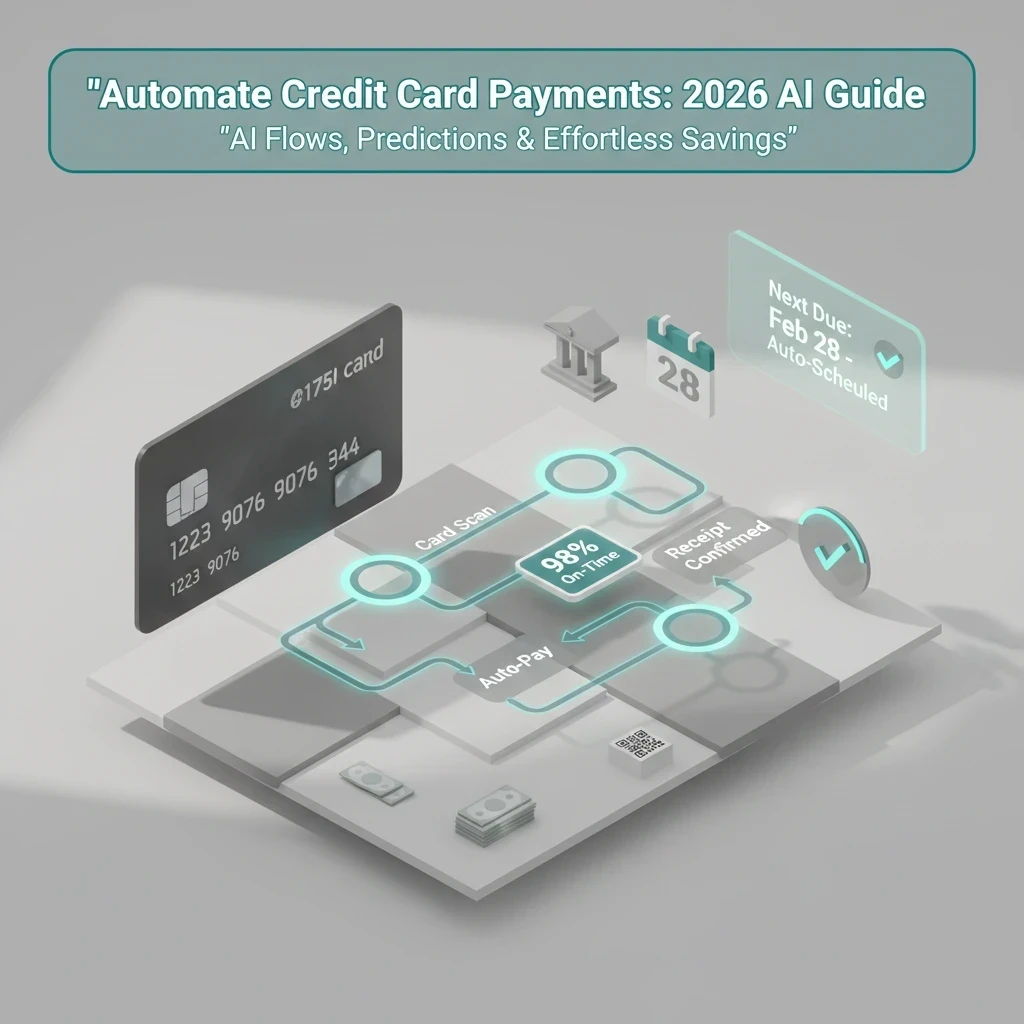
In 2026, managing personal debt has shifted from a manual chore to a strategic process governed by automated credit card payments. As financial systems become more integrated, the ability to ensure on-time payments while optimizing cash flow is no longer just a convenience but a requirement for maintaining a high credit profile. This guide explores the transition from traditional bank autopay to advanced AI driven financial agents.
The Essentials of Credit Card Automation
Automation is the foundation of modern financial health. By setting up automated credit card payments, you eliminate the risk of human error and late fees which can negatively impact your creditworthiness for years.
Can I make credit card payments automatic for all my cards?
You can automate payments for every card you own through two primary methods. The first is through your individual bank portals using a direct debit instruction. The second, more advanced method, involves using a centralized financial hub that aggregates all your card data to manage outflows from a single source of funds.
Payment due date vs. statement date
Understanding the distinction between these two dates is critical for automation. The statement date is when your bill is generated and your balance is reported to credit bureaus. The payment due date is the final deadline to avoid penalties. Effective automated credit card payments are typically scheduled between these two dates to ensure the balance is paid before interest accrues while still allowing the reported balance to reflect active credit use.
When to pay your credit card to improve credit score in the UAE
To maximize your score with the Al Etihad Credit Bureau (AECB), you should aim to keep your credit utilization below 30%. Scheduling your automated credit card payments a few days before the statement date can help lower your reported balance. This is a common strategy used by professionals in the region to maintain high eligibility for future loans.
Managing multiple cards: Key dates you can't ignore
When juggling multiple accounts, the most dangerous dates are the "Grace Period" end dates. Automation ensures that even if you forget a specific deadline, the minimum or full balance is covered. Missing a single payment can drop a high AECB score by over 50 points, making centralized smart assistant tools essential for oversight.
Applying the 2-3-4 Rule to avoid rejection
The 2-3-4 rule is a strategic guideline used to prevent credit rejection due to "velocity." It suggests limiting yourself to two new cards in 30 days, three cards in 12 months, and four cards in 24 months. By adhering to this rule, you ensure your credit report does not show signs of financial distress. This keeps your interest rates low and your approval odds high.
Pros/cons of manual monthly automation
While manual monthly oversight provides maximum control, it carries a high cognitive load. Automated credit card payments offer peace of mind and protection against forgetfulness but require a buffer of cash in your linked account. The ideal middle ground is a system that provides notifications managed and summarized by ai before a withdrawal occurs.
How Traditional Autopay Works
Traditional autopay functions through a pre-authorized agreement between you and a financial institution or service provider. This system essentially creates a "standing instruction" where money is moved automatically based on a schedule you define. Understanding the underlying mechanism helps you decide which bills are suitable for this type of rigid automation.
Setting up bank autopay basics
Bank autopay is primarily managed through a "Direct Debit" instruction. To set this up, you provide a merchant or your credit card issuer with your bank account number and sort code. You then choose whether to pay the minimum amount due, a fixed monthly sum, or the full statement balance. Once authorized, the bank "pulls" the funds from your account on the agreed date. Most institutions require at least seven days for this instruction to become active, so manual payments are often necessary during the initial transition period.
Recurring payments: Netflix to utilities
A recurring payment differs from a direct debit because it is linked to your debit or credit card number rather than your bank account. Often referred to as a "Continuous Payment Authority," this is the standard for subscription services like Netflix, gym memberships, and monthly utility bills. While convenient, these payments can be harder to cancel than bank direct debits because the authorization stays with the merchant rather than your bank. By grouping these on a single card, you can easily monitor your total monthly fixed costs.
I have completed Section 2. Should I proceed to Section 3: Avoiding the Autopay Trap regarding overdrafts and fraud?
Setup recurring payments on credit cards This video provides a practical walkthrough of the steps required to set up and manage recurring payments within an accounting or billing interface.
Avoiding the Autopay Trap
While automation provides convenience, relying on "dumb" or static systems can lead to financial setbacks. Without active oversight, automated payments can withdraw funds during periods of low liquidity or fail to detect errors in billing. Understanding these risks is the first step toward building a resilient financial system that protects your capital while maintaining your credit score.
Risks of "dumb" automation: Overdrafts, fraud
The primary hazard of standard bank autopay is its lack of balance awareness. If a credit card issuer attempts to pull the full balance and your checking account has insufficient funds, you may face both an overdraft fee from your bank and a returned payment fee from the card issuer. Furthermore, static automation often hides fraudulent charges. If you do not review your transactions before they are paid, a small unauthorized charge can escalate into a recurring loss. Using an ai secure wallet allows you to centralize your card management and monitor every outgoing payment from a single, transparent interface.
Safe setup for payments to people and providers
When automating payments to individuals or independent service providers, you should avoid sharing your primary bank details. Instead, use payment links or virtual cards that can be paused or capped at a specific amount. This ensures that you maintain control over the transaction and prevent unauthorized subsequent withdrawals. By combining your payment strategy with an integrated ai expense tracker , you can verify that every dollar leaving your account corresponds to a legitimate service or product.
Strategic Financial Freedom
Strategic financial freedom in 2026 relies on the ability to move from manual oversight to an "agentic" workflow. This means using technology that can make intelligent decisions based on your real-time financial status rather than following a rigid, calendar-based rule.
AI vs. bank autopay: Which is better?
Traditional bank autopay is a basic tool that executes a command regardless of external factors. AI driven automation is significantly better because it analyzes your cash flow and identifies the most efficient time to pay a bill. For instance, if your salary is delayed, an AI agent can detect the shortfall and notify you before an automated payment triggers an overdraft. This proactive approach prevents the administrative friction associated with manual banking. To understand how to implement these systems, it is helpful to see ai personal assistant in the context of personal finance.
AI powered shopping and expense tracking for savings
Financial freedom is achieved not just by managing debt but by optimizing spending. By using an AI to track your expenses through WhatsApp, you gain immediate insights into your consumption patterns. This allows you to identify subscription fatigue or unnecessary costs before they impact your ability to pay off your credit cards. Integrating these insights into the artificial intelligence in uae digital ecosystem ensures your finances are as modern and efficient as the region’s infrastructure.
Automated Credit Card Management in 2026
In 2026, automated credit card payments have evolved from static bank instructions into intelligent, agentic workflows. By utilizing a smart assistant, individuals can now synchronize payment due dates with their real-time cash flow, ensuring that balances are settled to optimize credit scores without the risk of overdrafts. This transition allows for the implementation of the 2-3-4 rule to maintain high credit eligibility while delegating the administrative burden of tracking multiple card statements.
Within the artificial intelligence UAE landscape, localized tools like Superchat.ai provide a secure, encrypted interface for managing these financial obligations. By integrating a secure wallet and automated expense tracking within WhatsApp, professionals can eliminate repetitive "Life Admin" and focus on high-impact personal and professional growth.


