

Feb 19, 2026
Planning a trip used to require separate tabs for flights, hotels, activities, and ground transport. Each service operated in isolation, forcing you to cross-reference dates, locations, and confirmations manually. An automated trip planner collapses that fragmented process into one conversation that handles research, planning, and booking without switching platforms.
Superchat.ai is built specifically for this. It functions as a chat-native trip planner designed for UAE travelers, managing itinerary creation and booking execution inside one continuous thread with local data residency and encrypted UAE-based storage.
1. From Inspiration to Itinerary: Why You Need a Trip Planner AI
Trip planning AI transforms unstructured travel ideas into executable itineraries. The shift from manual coordination to automated planning is not about convenience alone. It is about eliminating the coordination failures that break trips before they start.
The End of "Tab Fatigue": How an Automated Trip Planner App Solves Search Chaos
The average traveler opens 12 to 15 browser tabs when planning a multi-day trip. Flights, hotels, rental cars, restaurant reservations, and attraction tickets each require a separate platform. None of these platforms communicate with each other, so date conflicts, double bookings, and orphaned reservations happen frequently.
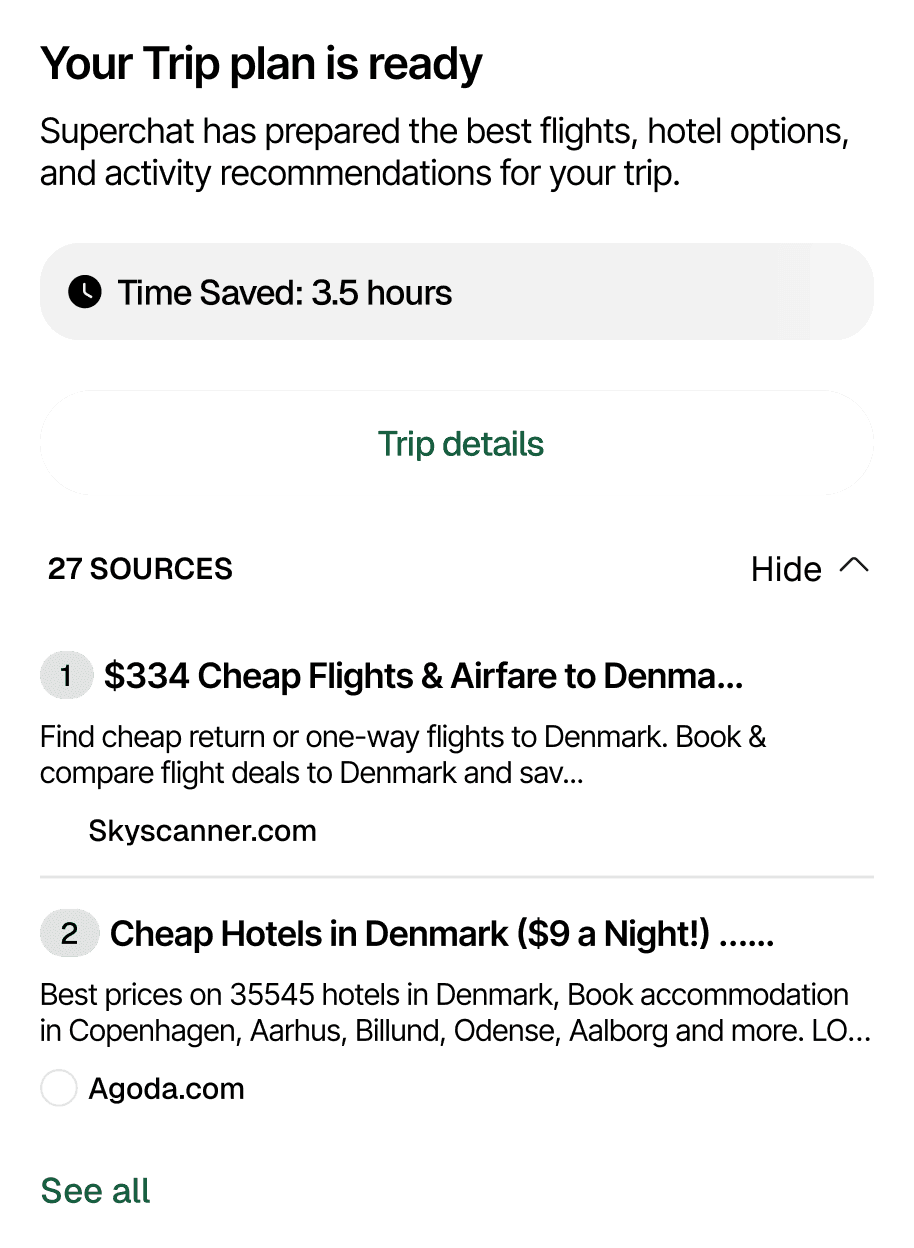
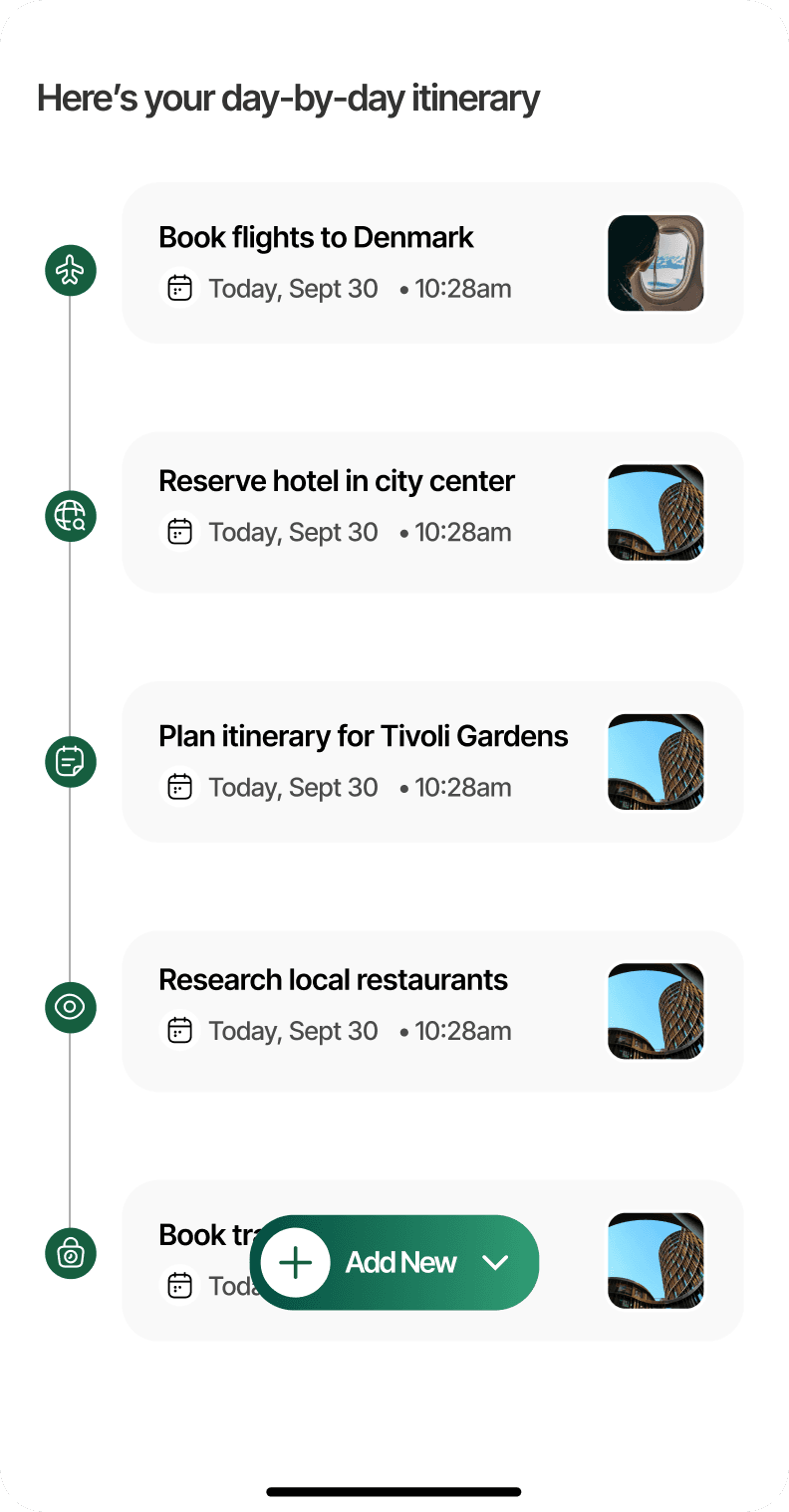
An automated trip planner consolidates every service into one interface. You state your destination, dates, and preferences once. The planner pulls flight options, hotel availability, and local activities into a single itinerary, checking for conflicts before you confirm anything.
Tab fatigue is not just annoying. It creates booking errors. Mismatched check-in dates, overlapping reservations, and forgotten confirmations cost travelers time and money. An automated system eliminates these errors by design.
Why a Free AI Trip Planner Is Often Better Than a Traditional Travel Agent
Traditional travel agents charge service fees or earn commissions from preferred suppliers. This creates a financial incentive to prioritize certain hotels, airlines, or tour operators over alternatives that better match your preferences.
A free AI trip planner operates without commission-based incentives. It recommends options based on your stated criteria, not supplier kickbacks. The result is a cleaner match between what you ask for and what you receive.
For UAE travelers, this distinction matters. Regional carriers like flydubai, Air Arabia, Emirates, and Etihad each serve different route networks at different price points. A commission-driven agent may push Emirates on every route. An AI planner ranks options by your actual preferences: price, departure time, layover duration, or carrier loyalty program.
Is AI Travel Planning Secure? Why Local Data Residency Matters in the UAE
AI trip planners store your passport details, payment information, travel history, and location data. Where that data is stored determines who can access it and under what legal framework.
Global trip planning platforms store user data on foreign servers, subject to the privacy laws of the hosting country. A UAE-based automated trip planner stores data locally, under UAE data protection regulations. This means your travel profile remains within UAE jurisdiction, not on infrastructure governed by foreign data access laws.
For context on how AI in the UAE operates within local regulatory frameworks, the PDPL (Personal Data Protection Law) governs how platforms collect, store, and transfer personal information.
Beyond a List: How an Automated Trip Planner App Executes Bookings
Most itinerary apps generate lists. They show you flight options, hotel recommendations, and activity suggestions, then redirect you to third-party sites to complete each booking separately. This creates the same fragmentation problem the planner was supposed to solve.
An automated trip planner app that executes bookings completes the transaction inside the platform. You confirm your flight, hotel, and rental car in one conversation. Payment processes once. All confirmations arrive in the same thread.
This is the functional difference between a planning tool and a planning agent. A tool provides information. An agent completes tasks.
Local Intelligence: Accounting for UAE Weekend Patterns and Visa Requirements
The UAE operates on a Friday-Saturday weekend. Global trip planners default to Saturday-Sunday, which creates scheduling conflicts for business travelers coordinating meetings or families planning weekend trips.
A UAE-native automated trip planner accounts for this in its date logic. Weekend getaways default to Thursday evening departures and Saturday returns. Multi-day itineraries align activities to the local week structure automatically.
Visa requirements also vary by traveler nationality and destination. A UAE resident traveling to Europe faces different visa rules than a UAE resident traveling to Southeast Asia. An intelligent trip planner flags visa requirements at the planning stage, not after you have booked non-refundable flights.
3. Comparing the Market: Superchat.ai vs. Traditional Organizers
Not all trip planners execute the same function. Some organize information. Others complete transactions. The difference determines whether you end up with a checklist or a confirmed itinerary.
Why Wanderlog and TripIt Are Failing the Modern "Chat-First" Traveler
Wanderlog and TripIt are itinerary organizers, not booking agents. Both platforms excel at collecting confirmations from your email and displaying them in a timeline format. Neither completes a booking natively inside the app.
The workflow they support is still fragmented. You search for flights on one platform, book on another, receive a confirmation email, and then manually forward that email to TripIt or import it into Wanderlog. The organizer visualizes what you have already booked. It does not book anything for you.
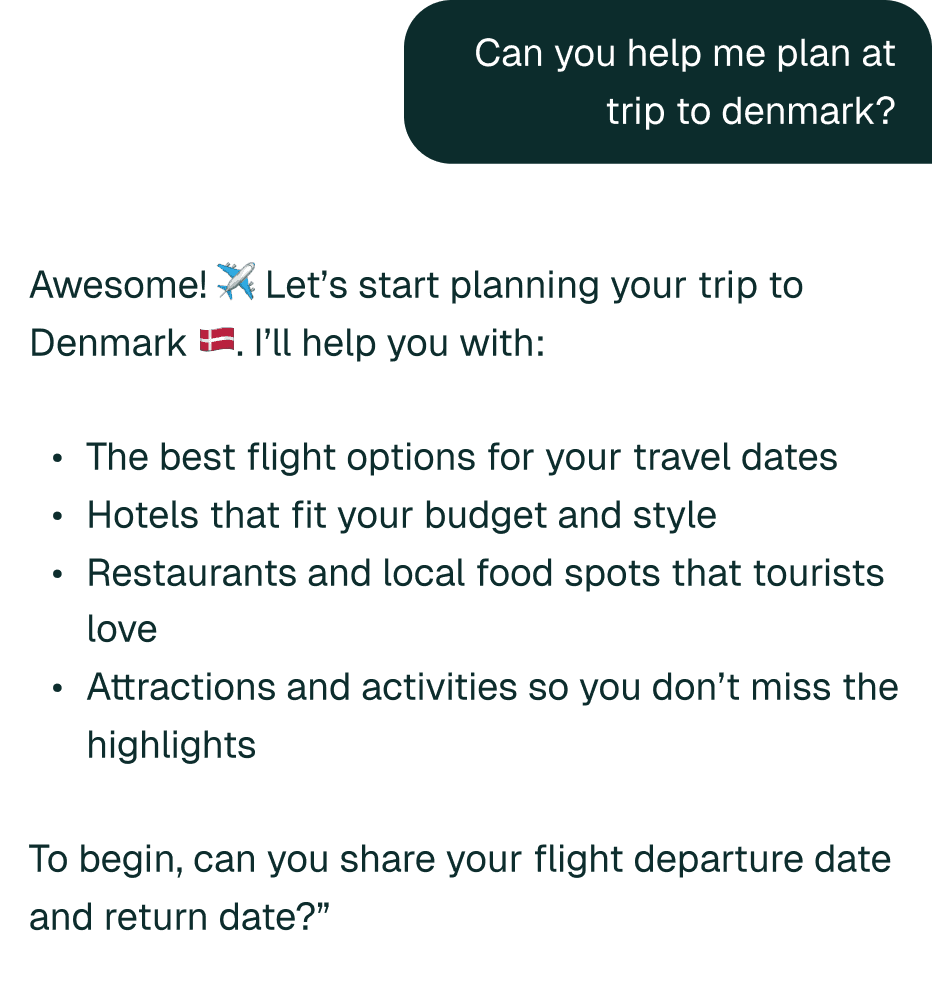
A chat-first traveler expects the opposite workflow. State your trip requirements in natural language, receive curated options, confirm your choices, and get booking confirmations in the same thread. No email forwarding, no manual imports, no switching platforms mid-process.
This is where choosing the best AI assistant app in UAE becomes critical. An assistant that only organizes existing bookings is fundamentally different from one that executes bookings on your behalf.
The ROI of Privacy: Why Your Data Shouldn't Leave Encrypted UAE Servers
Privacy is not an abstract concern for frequent travelers. Your travel data reveals business movements, meeting locations, family patterns, and financial behavior. That data profile has commercial value, which is why ad-funded platforms monetize it.
A UAE-based trip planner that stores data on encrypted local servers removes that exposure entirely. Your itinerary, payment details, and travel history remain within UAE jurisdiction, governed by UAE data protection law, with no third-party sharing agreements.
The return on investment for privacy is risk reduction. Data stored on foreign servers is subject to foreign access laws. Data stored locally is not. For business travelers coordinating sensitive meetings or high-net-worth individuals managing family travel, this is not a secondary feature. It is the primary requirement.
Smart Nudges: Predicting Travel Delays Before They Ruin Your Itinerary
An intelligent trip planner monitors live flight data, weather disruptions, and airport operational status after you book. If your connecting flight shows a delay that threatens your onward journey, the system flags it before you arrive at the airport.
This is distinct from post-disruption rebooking assistance, which most travel platforms offer. Smart nudges operate proactively, giving you time to adjust plans before a delay cascades into missed connections, lost hotel nights, or canceled activities.
For UAE travelers routing through Dubai International (DXB) or Abu Dhabi International (AUH), both of which serve as major global connection hubs, this predictive layer prevents missed long-haul connections that can derail entire trips.
A Superchat AI assistant applies this same proactive logic across your entire itinerary, not just flights.
4. The Superchat Advantage: Turning Conversations into Confirmations
The functional gap between planning and booking defines the quality of a trip planner. Superchat.ai closes that gap by executing transactions inside the conversation, not redirecting you to external platforms.
One-Place Verification: No More Hunting Through Emails for Booking Codes
Traditional trip planning generates confirmation emails from multiple sources: one from the airline, one from the hotel, one from the car rental company, and another from the restaurant reservation platform. Each confirmation contains a different booking code in a different email thread.
When you need to modify a reservation or check in at a counter, you have to search through your inbox to find the relevant code. An automated trip planner that stores all confirmations in one thread eliminates this search step entirely.
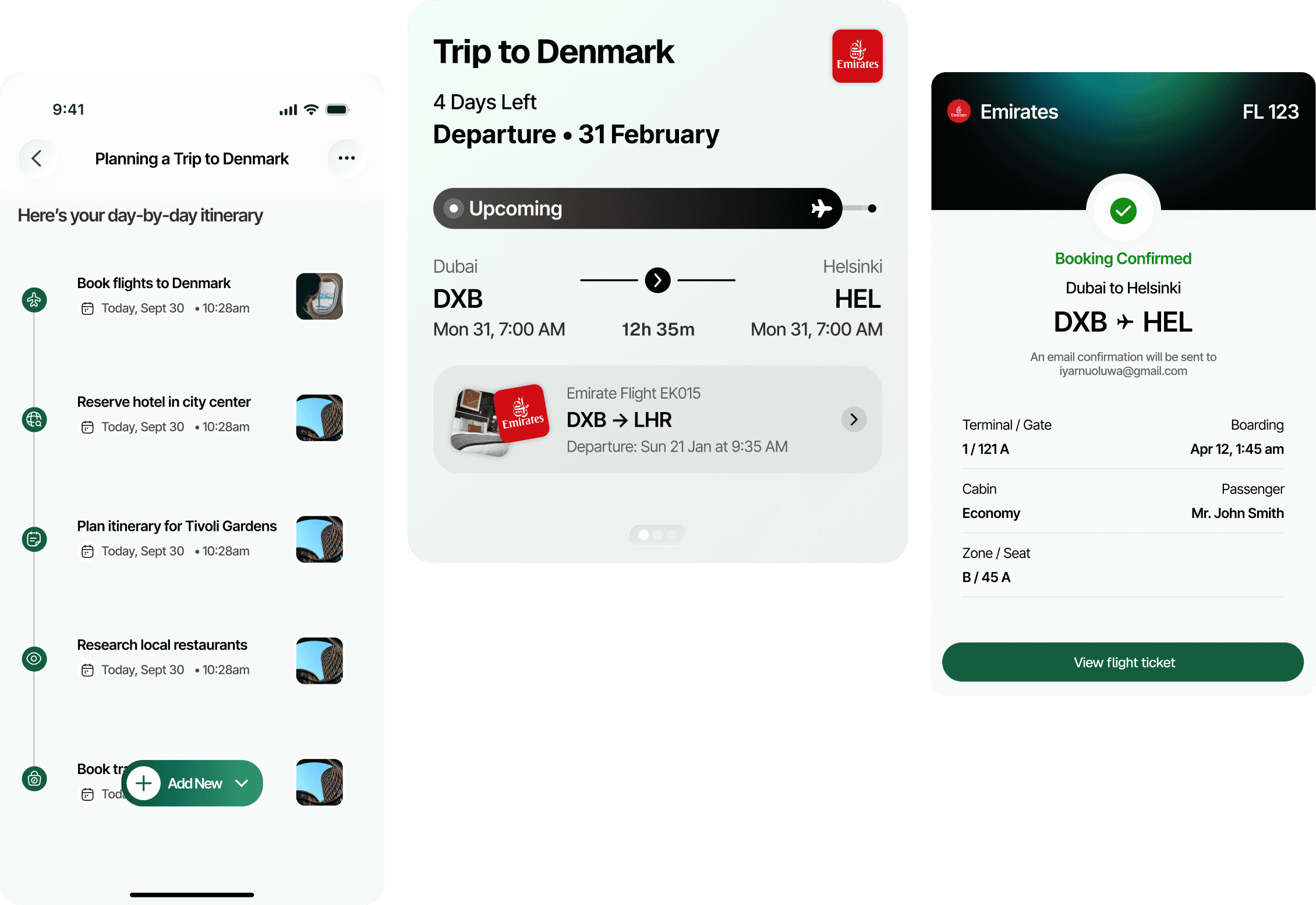
Superchat.ai delivers every booking confirmation inside the same conversation where you made the reservation. Your flight e-ticket, hotel confirmation, and activity vouchers all appear sequentially in the chat. No inbox search, no separate app to check, and no risk of a critical email landing in spam.
Secure Transactions: Why Encrypted Partners Are the Backbone of UAE Travel
Payment security in travel booking depends on two factors: encryption at the transaction layer and the regulatory framework governing the payment processor. A UAE-based trip planner routes payments through locally compliant financial partners, keeping the transaction within the same jurisdiction as the traveler.
This matters because cross-border payments introduce additional points of exposure. Every intermediary in the payment chain represents a potential vulnerability. A direct, encrypted transaction between the traveler and a UAE-regulated payment processor minimizes that chain.
For practical implementation of secure payment workflows, see how to automate credit card payment through an AI assistant without exposing card details across multiple platforms.
The result is faster authorization, fewer declined transactions due to international fraud filters, and clearer recourse in the event of a dispute, all governed by UAE commercial law.
More to explore